
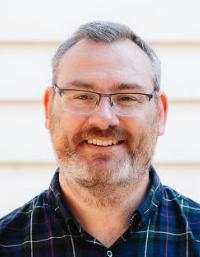
 I remember the very first time I went to the church, and the feeling I had. I was working as a graphic designer, and I’d be contacted to make a logo for this new church. It was called ‘Docklands Church’ then, because it met in the newest part of Melbourne, the Docklands precinct, and I went there one Sunday, as a designer trying to understand his client. It became something much more personal than that, though, because almost as soon as I entered the space, I felt like I’d entered something I wanted to be a part of – something that God was going to work in. I’ve been there ever since ...
The story of that church, which would soon become City on a Hill, is a remarkable story of God’s grace. Planted by just a small group of people in 2007, it has become a movement of churches, with 11 churches now spread along the eastern seaboard of Australia, and an average weekly attendance of 3300. Currently, City on a Hill has three more plants to launch in the coming months, with a vision and prayer to plant 50. In a time of decline for the Australian church, it stands out as a sign of grace – a work of God that has touched the lives of many and has the potential to be a great encouragement to God’s people across our nation.
But what is it like on the inside, and how has it become this? How has God led this church, and what might he be doing through it? As someone who has been involved from almost the very start, I hope to shed some light on this.
I believe the story of City on a Hill is a testament to God’s abundant grace, for he has chosen to bless us in many exceptional ways. For instance, I think of how we secured our first venue, James Squire. At that time, Guy Mason, was living in Docklands and searching for a suitable location for a church. One night, he and his wife Vanessa visited James Squire and remarked to each other that this would be an ideal venue. The very next day, Guy shared his vision for the church plant at St. James Old Cathedral in West Melbourne. Immediately after the service, he was approached by a couple from Sydney, who were in Melbourne for the weekend, heard the church bells and wandered in. They approached Guy after the service, offering to help and support the best they could, and specifically offered up a venue they owned free of charge. It just so happened that they owned the James Squire Brewhouse in the Docklands ...!
Stories like that gave me – and many others - a sense that God was at work in this in a special way. I’ve seen many more since then, that have convinced me that this is God’s work, and he deserves all the praise and glory. It’s still worth asking, however, how he has worked through his people, to consider how he might work in the lives of others.
LEADERSHIP
God’s way of working in his church is often through key leaders, and I think God has done that with Guy Mason, the Senior Pastor of City on a Hill. His own story of coming to faith from an unbelieving household and troubled background has imprinted itself on the church, ensuring an outward focus and missional heart. His godliness, faith, energy and determination have shaped the culture of the staff team and the churches under his oversight. There is a restless competitiveness in Guy – manifested not so much against others so much as against himself, and any sense of mediocrity. This means we are constantly seeking the next horizon – ‘satisfied with God’s goodness, yet hungry for more’, as Guy himself has put it.
But while it is important to acknowledge the key role Guy has played, it’s also worth noting some of the other lesser-
known leaders – people like Andrew Grills, who led the first plant in Geelong, and has since helped plant three other churches on the Bellarine Peninsula, or Nick Coombs, who arrived at Docklands as an 18-year-old and has since planted in Melbourne East and now oversees church planting across the Movement. I also think of people who labour largely behind the scenes – like Ian Scarborough, the Executive Pastor of the Movement, whose strategic skills have been crucial in building the infrastructure that sustains the ministry, and women such as Stephanie Judd, Alice Arnott and Emily Lancaster, who have helped shape a culture of prayer, vision, and pastoral care.
UNITY AND TRUST
As it has developed, City on a Hill has grown increasingly complex and diverse, but a God-given commitment to unity has kept us together. Each church feels quite different – seeking, as it does, to reflect and reach the culture of their specific location – but this diversity is built on a unified vision of preaching the whole counsel of God, convinced that God is powerful to save and that his truth is relevant and life-giving to all people. This has also enabled us to maintain unity within theological diversity; we have attracted a broad mix of Calvinists and Arminians, cessationists and continuationists, believer and infant Baptists, but the razor-sharp focus on the things that unite us has meant that these secondary elements have enriched our experience, rather than fragmented it. Underpinning all of this is a culture of trust. Clear communication is key, but also an attitude of trust; we speak often about the need to ‘fill gaps with trust, rather than suspicion’, conscious that the Devil will always seek to sabotage gospel work through division. Considerable time and effort also goes into building a sense of ‘team’, with regular all-staff meetings and summits, while our Lead Pastors have a number of formal and informal connection points.
CULTURAL ENGAGEMENT
City on a Hill began life in the era of the ‘emerging church’; in a post-Christian culture, God’s people sensed the need for new methods of reaching the lost. Church plants were at the vanguard of this, and so we had considerable freedom to try new things – such as meet in unconventional venues, like pubs and cinemas (or even outside, in the case of our Torquay church!), or further our reach through social media.
Our primary method of cultural engagement, however, is through the pulpit, for while mediums have changed, the message remains the same. We study the culture constantly, looking for the things that we can celebrate, but also noticing the questions, the needs, and the longings – the faultlines where the gospel can offer life and hope. This then shapes how we teach; when developing a teaching series, for instance, we consider not only the needs of the church, but of the surrounding community. Sometimes this is very overt – such as ‘Tough Questions’ series, where we invite questions from people, or our Left + Right series on politics, or Him & Her, which addressed the ideas of gender and relationships – so crucial in our age. Within a service we will also seek to acknowledge the questions of the culture, playing vox pop videos or giving time for SMS questions after the sermon.
INNOVATION AND EXCELLENCE
‘Excellence’ is, sadly, almost a dirty word in evangelical circles; oft-used in Pentecostal churches, the word seems to connote glitz and superficiality for many in our traditions, and is therefore eschewed. It’s possible, though, that this is something of a cover for an instinctive Australian casualness, and – worse – a culture of mediocrity that is held captive to fears of ‘tall poppy syndrome’. At City on a Hill believe that we truly ought to pursue excellence – that if we are doing something to the glory of God (1 Corinthians 10:31), we ought to do it well.
Most obviously this shapes our Sunday services. The gathering of God’s people is a holy and significant thing, and so we plan our services in detail and review them regularly. We pay attention to the 1 percenters, such as the transitions between elements, conscious that long silences or fumbling around can break the mood of spiritual attention. To help draw people to the service, we invest in high-quality design and clear, messaging online, recognising the value of aesthetics and the need for clear communication. Beyond that, we seek excellence in personal ministry, providing extensive professional development for staff, in-depth training for volunteers, and seeking regular feedback from outside voices.
This also prompts innovations. As already mentioned, this is seen in our efforts to engage the culture, but it is only possible because of an underlying openness to innovation. We have a timeless gospel, but recognise the need to present it in a timely way – and so we have tried to do that. During Covid, for instance, we invested substantial resources in high-quality video services, and have continued to broadcast in-person services since.
GOSPEL CONFIDENCE
Of all the things that have characterised our story, though, I think the most crucial has been ‘gospel confidence’ – a God-given, God-shaped optimism that suffuses everything we do. The miracle of the gospel means we refuse to accept the limitations of a post-Christendom world, believing that God has placed us in this moment for a purpose. In humble dependence on him, we pursue a big vision, desiring his glory rather than our own. This is led from the heart of the church. Guy is many things; an engaging preacher, a visionary, a good team-
builder – but I actually think the most unique gift he has is the gift of faith. I have worked alongside Guy for almost two decades, and I have never known a leader to have such a strong sense of possibility
. This is not a plaintive hope, or even just imagining what might be; it is a purposefulness borne of a deep conviction that God is able. When planting the church, Guy was told by someone that it was likely to fail and he was effectively risking his ministry career.. However, he stepped out in faith, imagining something more than that – and so, by God’s grace, it has proven.
Such a faith builds momentum. It draws other people of faith, willing to pray that God will do immeasurably more even than what we ask or imagine (Ephesians 3:20). Others who perhaps lack that boldness find themselves caught up in it; as they see bold prayers answered, they begin to pray bold prayers themselves, and an atmosphere of faith starts to suffuse the whole group.
This has become central to our story – and, by God’s grace, it will continue to do so.
Rev. Luke Nelson serves as the Lead Pastor of City on a Hill Melbourne West.
Rev. Guy Mason is the Senior Pastor of City on a Hill, leads City on a Hill's founding church in Melbourne CBD, and serves as an Archdeacon in the Diocese of Melbourne.
Most of the City on a Hill churches are located within and licensed by the Anglican Diocese of Melbourne as Authorised Anglican Congregations. The lead pastor of City on a Hill Ballarat is licensed by the Diocese of Ballarat. The City on a Hill churches in Qld and NSW are denominationally independent.