
 I read in a book on management that minor technical changes are easy to achieve, but cultural changes are hard to achieve! And if cultural changes take a long time to achieve in a church, they take much longer to achieve in a larger and looser structure such as a diocese. But cultural changes in a diocese have a great impact on local churches.
WHAT HAPPENED?
In this election, we saw a massive cultural change to focus on evangelism!
Who did we elect? 70% of the Melbourne Anglicans who were members of Synod voted for Ric Thorpe, an effective personal evangelist, experienced in planting churches with the gospel, and reinvigorating churches with the gospel, the gospel of God’s free gift of grace and love in the Lord Jesus Christ. We voted for an Archbishop to transform the culture of the diocese and our churches from maintenance to mission, and a cultural change to prioritise evangelism!
Evangelism, bringing people to faith in Jesus Christ as Saviour and Lord, has been so easily lost in the midst of many worthwhile activities. We voted for it! And we voted for an Archbishop whom we hope will provide engaging and pastoral leadership and encouragement in ministry, and help the Diocesan administration and finances to support evangelism and ministry in all our gospel front-lines!
In this context, we should remember the positive contributions of recent Archbishops. David Penman [1984-89] encouraged multi-cultural, multi-ethnic ministry, and attempted to reshape the diocese for gospel growth. Peter Watson [2000-05] preached Christ most attractively in many churches. Philip Freier [2006-25] promoted and cared for multi-ethnic ministry, among whom are many strongly committed to evangelism. He also supported City on a Hill, a highly productive church-planting ministry, the most significant church growth movement in the history of our diocese.
Other agents for cultural change have been youth ministry in parishes and Diocese; the teaching and training provided by Ridley College; the constant input on cross- cultural ministry from the Church Missionary Society; the activities of EFAC; the contribution of the New Cranmer Society in encouraging good people to stand for election to Diocesan committees; and those who have prayed for the reformation and renewal of the Diocese. We should also recognise the inspiration provided by significant evangelistic leadership from the UK and USA.
In addition, impetus for radical change came from the parlous state of the Diocesan budget: we are spending well beyond our means, and facing financial disaster. We needed a drastic change in policy and budget. We hope our new Archbishop will support these drastic changes, before we are bankrupt!
Perhaps one reason we appointed someone from outside the Diocese, was that we felt we needed an Archbishop who could take an objective view of our administrative and financial situation, and recognise the urgency of solving it!
HOW DID IT HAPPEN?
I have already identified some of the positive influences. However the reality of the election result lies in who are the members of Synod. To be elected as Archbishop, a person must gain the votes of at least 66% of the members of Synod. Synod is almost entirely made up of Clergy and Lay Representatives of parishes and Authorised Anglican Congregations. In 1982 evangelicals made up just under 1/3 of the members of Synod. Now in 2025, we were about 2/3 of the Synod. This meant that the Board of Nominators we elected had good evangelical membership, and that at the Synod, we not only had good evangelical candidates, but also elected an Archbishop committed to evangelism.[i]
[By way of contrast, in the Synod which elected Keith Rayner in 1990, the evangelicals were a minority on the Board of Nominators, and there were no evangelical clergy on the list presented to Synod.]
So how did the change happen? The simple answer is this:
- God raised up able men and women, who were then well trained for gospel and Bible ministry.
- They were accepted for ordination in the Diocese of Melbourne, served their curacies, and then became Priests-in Charge or Vicars of parishes.
- As they lived, taught, explained, and preached the gospel of God’s free grace and love in the death and resurrection of Christ, churches grew, and leaders with clear gospel priorities emerged.
- Some of those leaders then became Lay Representatives in Synod.
- Authorised Anglican Congregations, including Merri Creek, some Ethnic congregations and City on a Hill, also added to the Clergy and Lay Representatives in
One result of faithful gospel ministry by many ministers and lay people was this election result! It is a simple plan, but effective. Grow a movement, and change the church, to serve the world with Christ’s gospel!
But fundamentally, Christ has been at work, growing and building his church, calling sinners to repentance, raising up gospel workers, equipping clergy and lay people with gifts of ministry, calling us to repentance for our sins, forgiving our many faults and deficiencies, and continuing to grow and purify his church for which he died, and which he empowers in his resurrection and ascension, and on whom he pours out his Holy Spirit. Unless the Lord builds, we work in vain.
However!
An Archbishop, no matter how gifted, cannot solve all our problems! And any pride in our achievements will result in a fall!
WHAT DO WE NEED TO DO?
- Pray for the reformation and renewal of the Diocese, and for our Archbishop!
- Pray that God will raise up workers for his global gospel harvest, including clergy and other gospel workers in the Diocese of Melbourne! [A great need!]
- Maximise the gospel output of our own ministries!
- Contribute to a gospel ministry beyond our own!
- Make a positive contribution to the Diocese in prayer and participation!
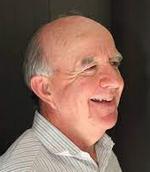
Peter Adam is a former principal of Ridley heological College in Melbourne and Vicar
Emeritus of St. Jude’s Carlton.
[i] ‘Evangelical’ here does not mean ‘USA Evangelical’! It means committed to the gospel of Christ’s atoning death and resurrection, personal evangelism, and commitment to the Bible and to God’s global gospel plan.