
The Story of TIMA: Planting New Life in Old Pots — The Vision and Practice of "Church Repotting"
 In Melbourne’s eastern suburbs, there is a developing Anglican parish — TIMA Anglican Parish. TIMA is composed of three churches: St Timothy’s Bulleen, St Mark’s Templestowe Lower, and St Stephen’s Greythorn. Across three locations and five services (two English, two Mandarin, and one Cantonese), congregants of different languages and generations are being reconnected under a single vision: not to give up on traditional churches, but to replant the "new life" of the Gospel mission within the "old pots" of existing churches.
I. BACKGROUND: WHEN ANGLICAN CHURCHES FACE DECLINE, IS "CLOSING DOWN" THE ONLY OPTION?
Over a decade ago, God began to show Ben Wong and a small team of coworkers a clear reality: many traditional local churches were facing structural dilemmas. This was not a problem unique to a single site, but a widespread phenomenon.
Observed Realities:
- Continuous decline in attendance.
- Lack of outreach ministries and adult baptisms.
- An ageing congregation.
- A lack of next-generation church leaders.
- Difficulty in developing the small local church model: Churches are bogged down by a heavy load of non- Gospel tasks (compliance, governance, OHS, child safety, property management, etc.). In small churches, a single pastor often handles administration, management, and pastoring alone. Consequently, they can at most "maintain services," making it difficult to refresh children’s and youth ministries, let alone talk about church planting or missions.
The most heart-wrenching result is that when a church can no longer sustain itself, it often moves toward being sold. Many church sites are actually located in dense residential areas; once the land is lost, even if God revives the city in the future, it will be very difficult for the church to return to that community because the location no longer exists.
This is not just a reduction in the number of churches, but also:
- The permanent loss of land and Gospel outposts in residential areas.
- A continuous decline in the church's influence on society.
In this situation, we began to ask a question: Does God really want us to watch churches disappear one by one?
II. VISION: CHURCH REPOTTING — STARTING NEW MINISTRY IN OLD CHURCHES
The core vision God gave TIMA is: Church Repotting.
"Repotting" is a very relatable image from daily life: when a plant stops growing and loses its vitality, we don’t necessarily throw it away. Instead, we can keep the same pot, refresh the soil, and plant a new plant inside so that life can grow again.
Similarly, we believe:
- God is not looking to discard His church, but to renew His church.
- He is bringing new life, new missions, and a new generation of people into places that seem dry and weary, making them Gospel centres in the community once more.
TIMA’s articulation of "Church Repotting" is:
"A dynamic network of flourishing churches, energised by the innovative initiative of 'Church Repotting'—a platform dedicated to fostering and nurturing new ministries within established yet declining churches.
Through the process of 'repotting,' these churches are envisioned to not only survive but thrive, evolving into vibrant centres of faith and service."
III. THE STORY: FROM A SMALL CHURCH OF 20+ PEOPLE, GOD LEADS THE WAY TO UNITY
1) 2014: The Starting Point at St Timothy’s
A Small Site, a New Beginning In 2014, Ben Wong was appointed as the Vicar of St Timothy’s Bulleen. At the time, the church had only one elderly English congregation of about 20 people. The site was small, with a maximum capacity of about 100 people.
While maintaining the original English service, Ben and a small team of about six people started a new Mandarin ministry. It was a beginning of faith: without resources or scale, they relied on God’s calling and vision, hoping to launch new pastoring and mission work within the old church.
2) 2019–2022: Two Churches Move Toward Partnership, then Merger
By 2019, St Timothy’s began to face limitations in space and ministry development. God also led us to begin communicating with nearby St Mark’s Templestowe Lower (the two churches are a four-minute drive apart).
At the time, St Mark’s was still financially healthy but faced the same challenges of an ageing congregation and a lack of a new generation. The two sites began to wonder: could working together make each other stronger? We gradually saw an important direction: If two small churches could unite to become a multi-staff parish, they would be more powerful than two churches fighting alone. The 2020 pandemic was an opportunity. The two churches collaborated on live-streaming services. The young people from St Timothy’s were able to use the equipment for the livestream, which was very important for elderly Christians during the lockdown. The congregants got to know each other better, and the partnership deepened as a result.
In 2021, the two churches officially entered a three-year Partnership Agreement, originally planning to blend slowly. However, after only one year, the congregants clearly saw the benefits of unity and even proactively suggested that there was no need to wait three years—they could merge immediately.
In 2022, both churches passed the merger with a 100% vote, officially establishing TIMA Anglican Parish. The name includes the "Ti" from St Timothy’s and the "Ma" from St Mark’s. More importantly, TIMA is an ancient Greek word meaning "honour." We hope to be a church that honours God.
3) 2022: A Third Church Joins — Seemingly Unwise, but Like a Calling Placed at the Door
Shortly after the merger, nearby St Stephen’s Greythorn entered a stage of "possible closure." From a human perspective, it seemed unwise to merge another church within three months of just completing one merger.
But we also asked: Why has God placed this at our doorstep? Is this directly related to the "Repotting" vision?
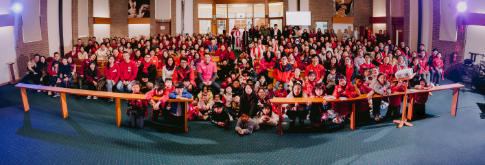
After prayer and discussion, the entire church passed the merger with "only one dissenting vote," and St Stephen’s joined TIMA. Today, TIMA has become a parish of three locations and five services, learning to move forward under the same vision across different sites and language groups.
IV. STRATEGY: RESPONDING TO NEW ERA CHALLENGES WITH "MERGE–INTEGRATE–SEND"
TIMA’s repotting strategy is not simply about "getting big," but about establishing a model that can be healthy long-term and capable of continuous sending.
1) Establishing a Multi-staff Parish: Centralising Administration to Release Pastors for Gospel Work
Many ageing small churches today face a common dilemma: they can often only afford to hire one pastor. However, besides Sunday services and daily pastoring, the pastor must spend a huge amount of time handling increasingly complex compliance and governance requirements that are updated annually. With an elderly and limited congregation, it is also difficult to find enough suitable volunteers to share the load. As a result, the church can barely maintain itself, making it hard to launch new Gospel ministries.
Therefore, the direction we are trying is merging nearby sites to establish a multi-staff parish. The Vicar centralises the primary administration and overall governance, while the other pastors can focus more on pastoring specific services and groups. Meanwhile, each service still retains its own characteristics and culture, continuing to serve people of different languages, cultures, and backgrounds.
Under this structure, we also face a very practical pastoral issue: how to integrate existing ageing services. Many ageing services do not have many people, yet they are scattered across different locations. Congregants' resistance to merging is often not out of rational calculation, but out of emotion and belonging—the fear of losing the church building that has accompanied them for many years, especially when relatives or spouses are buried in the church’s memorial garden; this connection is deep and hard to sever.
"Church Repotting" is not simply about "moving" the old members away; they have not lost their original church building. Nor is it just to maintain things for a few more years. The original church becomes part of a larger church; the elderly congregants still "own" it and have not "lost" it. When several originally scattered and weak ageing services are integrated, the numbers increase, relationships become closer, and more resources and vitality are naturally generated.
After merging the existing ageing services, the ideal service time slots can be reserved for the newly "replanted" services to better connect with the community.
2) Integrating Next-Generation Ministry: One Team Serving Multiple Service Groups
- Children’s Sunday School: Each service still retains children's ministry, but teaching resources and training can be centrally coordinated, making quality and continuity more stable.
- Youth Ministry: TIMA’s Friday youth ministry is composed of young people from the English, Cantonese, and Mandarin services. If the previous three churches were still operating independently, they would need three sets of youth cultivation systems; now, one youth ministry can serve the groups from all three locations.
- The Rise of the Fifth Service: The fifth service TIMA started this year is composed of teenagers from different services who have grown up into young adults. This group mostly comes from first generation immigrant families but possesses Australian culture and a local English context. The service they have established in the parish serves the next generation (not limited to immigrant groups), where issues of language, race, and culture will no longer exist. Consequently, even if certain services age or even need to close due to changes in migration waves or other reasons, this young adult community will quickly become the main force of TIMA, supporting the long-term development of the parish.
3) Not Pursuing Megachurch Services, but Using "100 People" as a Healthy Unit
The goal of repotting is to establish new services within old churches so the church can maintain, renew, and reconnect with the community. Therefore, our ideal is not to concentrate everyone into one super-large service, but rather:
- Each service develops to about 100 people: This fits the site capacity of most local churches and keeps community relationships close.
- If it reaches about 120 people: We begin to prepare to send and repot new ministries, giving the original service room to continue growing while extending the mission of church repotting.
- This ensures growth doesn’t get stuck in the painful transition of "moving from small to medium," but instead continues the mission and renewal through sending.
V. CHALLENGES: REPOTTING IS NOT A SLOGAN, BUT A PATH REQUIRING FAITH AND SACRIFICE
We are very clear that church repotting is not an easy path. The challenges TIMA currently faces include:
1) The Challenge of Vision Communication
Because TIMA has multiple services led by different pastors, the overall church vision and methods must be very clear to ensure that although congregants are scattered across different sites, they are still moving in the same direction. This means that the ministry team must first be united in their vision for the church.
2) The Difficulty of "Early Establishment"
Many ageing churches are unwilling to change or accept new management or merger models as long as they can barely maintain themselves. The result is often waiting until resources are exhausted and being forced to let go, which means new ministries require greater cost and energy to be re-established. TIMA’s first two churches are a positive example of two healthy small churches coming together to become a healthier church.
3) Lack of Training and Workers
Repotting needs new church planters and leaders, which requires:
- Recruiting the right people.
- Providing theological and practical training.
- Building healthy spiritual character and team culture.
Therefore, within TIMA, there is a ministry called the Neoshoot Network, whose main work is church planting and training church planters.
4) Need for Resources and Support
Church planting and repotting require money, manpower, administrative support, and long-term companionship. This also means we need more cross-site and cross-parish cooperation and support.
VI. THE FUTURE: FROM "ONE PARISH" TOWARD A "RESOURCING CHURCH," SUPPORTING MORE REPOTTING
TIMA has completed the first phase of repotting: establishing a three-site parish structure. Currently, while each service is self-sustaining, there is still room for growth.
In the next step, our goal is not to endlessly expand the number of TIMA locations. Conversely, as the ministries at the three sites gradually expand healthily, we hope TIMA becomes a resourcing church, sharing the models, structures, and experiences God has built among us with other struggling small churches.
We look forward to being able to do the following outside the TIMA parish in the future:
- Assist other churches in establishing similar multistaff parish structures.
- Provide feasible models for governance and administrative support.
- Release pastors and congregants back to the core of the Gospel mission.
- Ensure more "old pots" are not discarded but renewed, becoming Gospel outposts once again.
Although TIMA itself is still in a stage of exploration and has much room for growth, this does not affect our practice of the vision God gave us: church repotting. We have already prepared a church planting team and will launch repotting ministries outside of TIMA in 2026, expecting TIMA and the churches about to be replanted to grow healthily at the same time.
CONCLUSION: GOD IS NOT ENDING HIS CHURCH, HE IS RENEWING HIS CHURCH
The story of TIMA cannot yet be considered a "success case," but is a journey still in progress: we see the reality of decline, and we also see the hope of God’s renewal; we face resource constraints and the tension of change, and time and again we experience God’s leading in unity and sending.
We believe: Church repotting is not just a strategy, but God’s calling to His church in this generation.
May the Lord raise up more sites and coworkers across Australia willing to respond to this calling, so that those places that seem weary may once again sprout, grow, and bear fruit because of the Gospel.
“A shoot will come up from the stump of Jesse; from his roots a Branch will bear fruit.” (Isaiah 11:1)
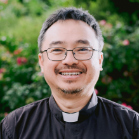
Revd. Canon Ben Wong is senior minister at TIMA.