
Essentials
Essentials 2020
- Details
- Written by: Chris Appleby
To look through the collection, see the article list on the left.
Publishing of Essentials is made possible by a paid membership so if you're not currently a paid-up member/subscriber we encourage you to become one so we can continue to fund this very worthwhile journal.Our Membership form is here.
Anglicans You’ve Never Heard Of - USA Edition
- Details
- Written by: RACHAEL LOPEZ
Following on from EFAC’s video series at the Anglican Conference in Melbourne 2018, we now meet Anglicans from around the world. When you think of an Evangelical Anglican in USA, you might think of the Anglican Church in North America (ACNA). However, as well having Evangelicals scattered through The Episcopal Church (TEC), there are also several other breakaway groups. First to be interviewed is Ryan Flanigan, who is part of the Anglican Mission in the Americas (AMiA) which operates as a mission society, not a denomination. Following his interview is Amanda from The Reformed Episcopal Church (REC), which split in 1873. Her church was led into Anglicanism when its pastor began exploring Church History.
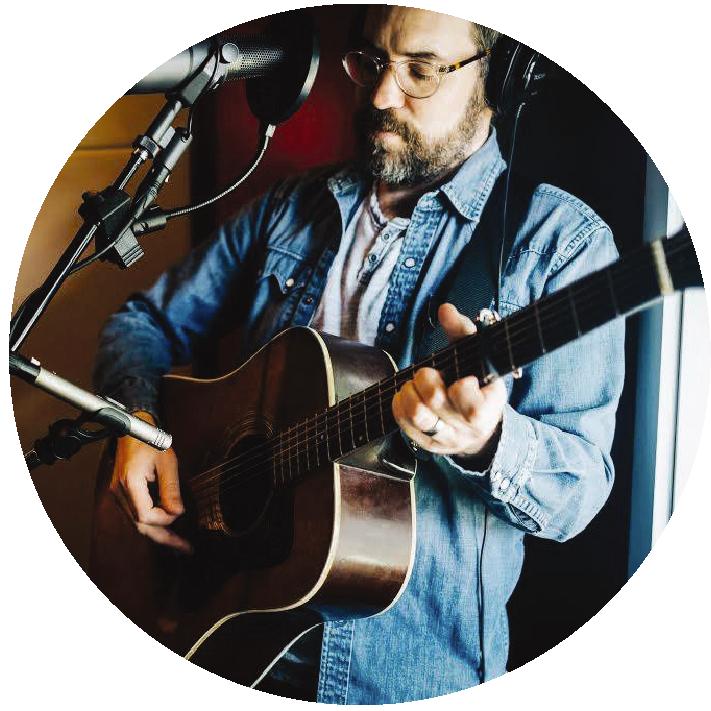
NAME //
Ryan Flanigan, Dallas, Texas
CHURCH //
All Saints Dallas
BELONGING TO //
Anglican Mission in the Americas (AmiA)
YOU’VE HAD A RANGE OF EXPERIENCES IN CHARISMATIC, EVANGELICAL AND SACRAMENTAL SETTINGS. WITH THAT BACKGROUND, IT IS AMAZING YOU WERE ABLE TO STUDY UNDER ROBERT E WEBBER. TELL US A LITTLE ABOUT HIM AND WHAT YOU LEARNED FROM HIM?
Remote Innovation
- Details
- Written by: Mark Juers/Joel Kettleton
Watch out mega-churches, video sermons have a new frontier!
Essentials speaks with Joel Kettleton about pioneering something new in a digital era. 
WHAT IS YOUR MINISTRY SETTING?
I’m the rector of the Anglican Parish of Sorell, Richmond & Tasman in the south-east of Tasmania. I’ve been here for eight years, initially as a curate then a locum and now the Senior Minister for the last five years. My context is a combined parish that has been joined together in some form for 130 years and we have a mixture of small congregations as well as larger ones. We meet in convict built buildings with small isolated congregations as well as a growing new church plant in a satellite suburb of Hobart. From top to bottom I have to cover 120 kilometres. A typical Sunday is that I’ll be at one service in the morning and one service in the afternoon but we have concurrent services happening in other places at the same time.
WHAT CHALLENGES DOES THAT GENERATE?
There is a big challenge of having good preaching that is consistent at each service every week. We have people who are able to help run services but they are not able or willing to preach.
I have the challenge of juggling many things at the same time. None of the congregations are the same but each has a unique identity and rhythm to their worship life. This makes it hard to manage the whole parish and use our limited time well. The question we have to keep asking is how do we grow a healthy church in each place, whether it’s a congregation of 5 or 50. We really want to identify people’s gifts and mobilise them for ministry so that they are confident disciples. We want them to be sharing their faith and making disciples themselves. This is really difficult when there’s 5 and you don’t live in the area and you’re not even there each week.
WHY DID YOU EXPLORE USING VIDEOS FOR SERMONS?
I wanted to be able to multiply the delivery of messages. Having seen large churches like City on a Hill do this across large congregations made me think this made sense to do this in smaller remote congregations as well. In places where I could train people to run church services but I couldn’t train preachers I’d rather have our local content that we were working on together delivered by video than just buying sermons off the shelf. When you buy or use someone else’s videos it’s not personal so when we’re talking about pastoring and preaching to your congregation that’s a big problem. Many videos are made for another cultural context so it can be hard for people to connect, they are like “yes, we’re just watching a video”. But there’s a real pastoral connection when we can make videos and preach to our congregation when we’ve got their feedback, when we’ve incorporated their story into the content. When we use b-roll from their location, it makes them feel like they’re part of the sermon.
WHAT MADE YOU THINK YOU COULD DO IT?
I watched a lot of youtube! Even the simplicity and effectiveness of video calling supports this. If such a simple thing could be done in a way that it is presented well, the technology is there now to be able to do that easily. I made my own youtube channel making music and car related videos and this helped me learn about the equipment and the craft of basic videography and content creation. I then spent a lot of time learning how to produce videos and once I’d done that it was a simple thing to combine video creation with preaching.
WHAT HAVE YOU LEARNED ALONG THE WAY?
I have a high threshold for failure. I didn’t know anything about lighting since I didn’t come from a photography background, so just used gear that I had. I learnt that it has to be short, no more than 10 mins unless it’s excellent and has different sections in it since our attention span on screen is very different to being in person. I learnt a lot about looking into the camera to engage with people, simple things that people who make videos know but takes some effort to turn it into a habit when you’re starting out.
I wanted to include the words of scripture on the screen so I spent a lot of time listening to feedback about how it didn’t quite work out, it was either too short or too long. It was interesting to find out about how people listen and read in different ways.
I wasn’t coached through any of this by an experienced content creator and if I had other people around me and been able to do a course this would have changed how quickly it was improved. However, it gave us a big opportunity to pastorally connect with the people I was making this for over the idea and work on it together. If they didn’t like the colour of the background they’d tell me, they said that it hurt their eyes. If they didn’t like the quality of the sound then I needed to change the sound setup and use a lapel mic. In a way, each of these failures was a win because we could collaborate on it and work together. In my context and especially with the tiny remote corners of the parish this was really important because they had never experienced anything digital like this before. They had only experienced a person and a prayer book so this was an enormous change.
Not only did I have to learn how to produce the content at my end, I had to learn how to display the content at their end. I wasn’t streaming it because our areas don’t have internet connections. Their buildings are not set up with wiring and some only have a single power point. I started with DVDs but didn’t like the way the editing program produced the DVDs, it was just too difficult. So I kept it to mp4 files stored on a USB and sent to the location. It was a challenge getting physical USB before their sermon time on a Sunday and making sure it is all set up and ready to work. I would mail it to them or I’d get someone to pick it up on their way back into the country. Several times I had to drive it out myself which is worth the three hour return trip except when they forget to turn the power box on and it doesn’t end up working! Thankfully they are resilient congregations and they have leaders to take the initiative and make the most of the time.
DOES IT NEED A LOT OF TECH GEAR?
No! Initially I just had my laptop with the webcam, that was it. My mobile phone with a microphone input actually works well enough to record something wherever I am and doesn’t require me to carry loads of gear around. However, using a DSLR or two with a Zoom audio recorder increases the quality a lot. For editing I started on Windows Movie Maker and then shifted to Powerdirector when I needed to synch audio and do other more complicated things.
WHAT IMPACT DO YOU THINK THIS HAS HAD?
It has meant that I can help my congregations as a pastor and teacher and they don’t feel like they’ve been abandoned. They really appreciate the energy and time put into it and it has kept our pastoral bond between semi-regular visiting.
It has also meant I’ve had to learn how to preach differently. I don’t have a teleprompter or something to read from so that has changed how I deliver the sermon and I’ve had to condense big sermons down into smaller versions.
This also has seeded a whole bunch of ideas for content creation in rural churches. It has led us in our parish to think creatively about how we can use pre-recorded content in places where they don’t have access to preachers. Beyond this we have joined in a bigger project picked up by the Tasmanian diocese who have partnered with Bush Church Aid. There is now a much larger scale project to produce digital content that can be released across the rural parts of the diocese.
ANY OTHER THOUGHTS FOR THOSE CONSIDERING SOMETHING LIKE THIS?
It can be daunting starting out but like any new skill, if you repeat a thousand times it becomes second nature. We’ve found that our whole staff team have become a lot more confident making videos. We’re more natural and capable, we do better editing, and we’re much more comfortable in front of a camera and watching ourselves on screen.
There is a danger with all this if we think every person should be doing video content all the time. It really is the context that needs to drive what you’re doing with video. If you want to take this on yourself, you need to have the creative knack or someone talented in your parish because the editing takes the longest. For me it was a way of presenting the gospel as well as I could in multiple places at the same time. If I was the pastor of a single congregation I wouldn’t have had that need, so don’t make video sermons unless you have a very good reason. Video is never as good as being in person, being physically present is always the ideal.
Ideas Page
- Details
- Written by: Mark Juers
If you’re stuck in a rut and looking for ways to keep evangelical ministry fresh and engaged then look no further than some of these thought provoking options. User discretion recommended and please see your bishop if symptoms persist. Creative results may vary from person to person.
If you’ve got a good idea to share, send it through to
|
|
PODCAST
With amazing titles like “Teddy Bears and Penalty Shootouts” and “Tetris and the Seed Potatoes of Leningrad” you’re sure to come across a good sermon illustration or two. This podcast is full of cultural factoids to empower your lateral thinking. |
|
|
DOGGOS FOR THE GOSPEL
Needing an excuse to meet new people and build relationships? Buy a dog and hang out at an off-lead park. It’s instant friendliness, a whole lot of regular time chatting and has the bonus of being good for your physical and mental health. The tricky part is getting to know the humans and not just the dogs... and the financial cost of a pet |
|
|
COFFEE IS KEY Expectations are high these days for quality coffee but it’s not easy producing a fair amount of reliable brew, especially if you need something transportable like Inner West Church in Kensington, Melbourne. You can get the Brazen, a grinder and a pump pot for under $400 and it means no pods, low waste, and it’s set and forget so it doesn’t require any skill. |
|
|
ARTS & LETTERS DAILY Arts & Letters Daily is like drinking from a cultural and philosophical firehose. If you want to see how the rest of the world is being pushed in its thinking then this is the place to go. I’m sure this is where Paul sourced his Titus 1:12 quote from. It’s a website but you can also subscribe to a weekly email update. |




Editorial - Summer 2019
- Details
- Written by: Mark Juers
Book Review: The Lord’s Prayer: A Guide to Praying to Our Father
- Details
- Written by: Chris Porter
The Lord’s Prayer: A Guide to Praying to Our Father
WESLEY HILL LEXHAM PRESS, 2019
The Lord’s Prayer, or Our Father, has to be one of the most well-known pieces of Christian scripture, read as it is in public occasions, openings of parliament, and throughout our media. Its familiarity has brought great benefit to many praying it, and comfort in times of trial. But how often do we reflect on its meaning? This new book from Wesley Hill is part of a series from Lexham Press on the Christian Essentials and seeks to explore the Lord’s Prayer for the seeker and saint alike. Dividing up the prayer into the basic clauses, Wesley reads and reflects on each in conversation with the long Christian tradition, highlighting how the prayer has been used in the past and reflecting on its significance for today. Wesley Hill’s reflections are well written and draw the reader into a conversation from Augustine and Barth to Thielicke and Williams, and a host of the faithful in between. These reflections aren’t just an academic exercise in information retrieval or knowledge building, but rather an engagement in robust Christian identity formation and discipleship. In the end one finds themselves praying the Prayer along with a community of the faithful as they work through the book. True to this direction the book is not merely a description of the Lord’s Prayer, but also how Hill himself prays the Lord’s Prayer. To this end a postscript is included that draws the reader into Wesley’s own devotional practice with the Prayer and the Prodigal Son in order to model a pattern of prayer for believers and sceptics alike. The book is beautifully produced by Lexham and contains several pieces of art that are themselves worthy of reflection. While I wish this book could be longer than 103 pages, the reflections in it will sustain faithful meditation for a long time. Indeed, as Wesley Hill closes: ‘To prayer the Our Father … with Jesus’ Father in view is to find yourself praying it in a way you hope never to stop.’ (101) I highly recommend this book.
// CHRIS PORTER, VIC
This review was originally published on Euangelion. Book provided for review by Lexham Press.
Book Review: The Apostles’ Creed: A Guide to the Ancient Faith
- Details
- Written by: Ben Underwood
The Apostles’ Creed: A Guide to the Ancient Faith
BEN MYERS LEXHAM PRESS, 2018
I have long enjoyed expositions of the Apostles’ Creed, so when I saw Ben Myers’ book on the shortlist for the Australian Christian Book of the Year, I was keen to read it. The book in the Christian Essentials series comes as a nicely designed small format hardback.
In his 130 page treatment of the creed Myers connects the creed to its roots as a confession of faith on the lips of those being baptised. Myers favours quotations from patristic writers, and sees the creed as both a ‘summary of Christian teaching as well as a solemn pledge of allegiance’ (p. 5). Breaking down the creed into 22 gobbets, this book is a series of gentle, 3-5 page meditations on the words from ‘I’ to ‘Amen’. I especially enjoyed the chapters on Jesus’ conception and birth, and his interesting last chapter on the sense in which we say ‘Amen’ to the creed. But whatever new and arresting thoughts a reader might discover in its pages (and there are many), the one thing that I imagine would be sure to raise the eyebrows of many Essentials readers, should they take up this book, is Myers’ universalism.
Universal salvation is a recurring and growing theme of the book. It begins unobtrusively, for example in the chapter on Pilate: ‘The salvation of the world can be dated. Certain people were there when it happened.’ (p. 62) (not just ‘salvation’, or the salvation of the church or of God’s people, but of the world). Later, we read that ‘As Jesus rises, the whole of humanity rises with him’ (p. 82). The Holy Spirit ‘broods over each of Christ’s followers, renewing the human race one at a time and drawing all into a common family’ (p. 101). The church is a ‘representative microcosm of what God intends for the whole human family.’ (p. 105). Belief in the forgiveness of sins means that we believe that ‘if we should ever turn away from grace, if ever our hearts grow cold and we forget our Lord and become unfaithful to his way, he will not forget us. His faithfulness is deeper that our faithlessness. His yes is stronger than our no.’ (p. 116).
Evangelical readers will be unpersuaded that the suggestions of Isaac the Syrian, or Origen, can be our grounds for belief on these matters, and moreover, will be unpersuaded that the Apostles’ Creed teaches universalism. But the questions ‘Who will be saved?’ and ‘Will they be many?’ will press itself upon us always. Myers mixes it into his exposition without comment. Perhaps the best response is to read our Bibles with those questions in mind. Can there be weightier questions?
// BEN UNDERWOOD, WA