
Essentials
Profile: Lonny Bendessi
- Details
- Written by: Mark Juers
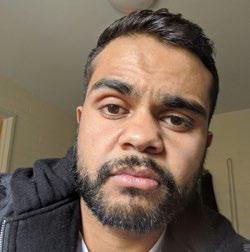 Aboriginal Christian and growing leader, Lonny Bendessi, shares his remarkable story with Essentials
WHERE ARE YOU FROM?
I was born in Adelaide. My family on my mother’s side is from a small place called Ceduna, which is 800km far west of Adelaide, we’re known as the West Coast mob. My father is from Western Australia, his mob are the Wongi mob from Kalgoorlie. I’m the second child of four in my family but I have a lot of cousins and we all call each other brother and sister. I found out I had a lot of first cousins who spoke English as a second language, they’re living out bush and wouldn’t live in the city.
I grew up in Adelaide until the age of 5 then Mum told me we’re going to Ceduna because that’s where we’re from. I stayed there until the age of 9 and that’s how I found out who I was, and that my people are the Wirangu people in the south and the Kokatha people just north of there. We stayed in a small community called Koonibba. It was interesting growing up there, as kids we would run amuck, didn’t care about anything, it was freedom. At home sometimes you’re surrounded by alcohol and violence but my mum and my cousins we all had each other. We’d all jump on our bikes to go out bush, ride around the whole community, make BMX jumps and climb trees.
Christians and Cultural Transformation
- Details
- Written by: Peter Corney
In a time of great disruption and change, how is Jesus calling all Christians to engage with our wider cultural context? Peter Corney provides a renewed vision of Christian responsibility and working for the common good. Peter Corney OAM is the Vicar Emeritus at St Hilary’s Kew, author, and these days a mentor to young ministers and Christian leaders.
The current ‘Black Lives Matter’ protests, particularly as demonstrated in the US media, jolted me into a fresh consideration of the role of Christians in social and cultural transformation. While I deeply sympathise with the core concern of the protest and the majority of the protestors, it was disturbing to see the level of violence and disorder and the reactions of Donald Trump. For those of us who witnessed the civil rights demonstrations in the sixties under the leadership of the Rev. Martin Luther King and other Christian leaders with their insistence on non-violent action, the comparison was a disturbing commentary on the present changes in our culture, its moral leadership and the source of its ethical motivation. I was reminded of lines from W. B. Yeats’ poem ‘The Second Coming’, written in 1919 at the end of WW1 and at the outbreak of the great flu pandemic. The seeds of Europe’s social, political and economic fragmentation in the 1930s and 1940s were sowed at this time. The bitter harvest of those seeds were the Great Depression, Fascism and the destruction wrought by WW2:
Things fall apart; the centre cannot hold;
Mere anarchy is loosed upon the world,
The blood dimmed tide is loosed and everywhere
The ceremony of innocence is drowned;
The best lack all conviction while the worst
Are full of passionate intensity.
Editorial Winter 2020
- Details
- Written by: Gavin Perkins
As I write this it seems that everything has changed. A number of media commentators have already begun to speculate as to what life will be like once the COVID-19 restrictions are eased. Will there be a new ‘roaring 20s’ post-pandemic as there was post-WW1 and Spanish Flu? Will there be a reassessment of value and meaning after so much upon which we have come to depend was so radically upended?
In 1625 an outbreak of the bubonic plague killed more than 10,000 people in London, during which time the Dean of St Paul’s Cathedral was the poet-priest John Donne. In his biography of Donne, John Stubbs writes of the fear that gripped London during lockdown.
‘Certain of waking up with the telltale sores on their bodies any day, people were gripped by criminal fearlessness to seize and enjoy what they could while they were still alive. Donne understood what motivated the spirit of suicidal hedonism that was loose in the city. [In a sermon he] described those who said to themselves, “We can but die, and we must die… Let us eat and drink, and take our pleasure, and make our profit, for tomorrow we shall die, and so were cut off by the hand of God”.’ (John Stubbs, John Donne: The Reformed Soul, Norton and Co. 2006, p. 424-5).
Will we see a revival of this same worldly fearlessness and hedonism, much like was witnessed in the 1920s? What we can be certain of is that even as the world stops its ears to theAs I write this it seems that everything has changed. A number of media commentators have already begun to speculate as to what life will be like once the COVID-19 restrictions are eased. Will there be a new ‘roaring 20s’ post-pandemic as there was post-WW1 and Spanish Flu? Will there be a reassessment of value and meaning after so much upon which we have come to depend was so radically upended?
In 1625 an outbreak of the bubonic plague killed more than 10,000 people in London, during which time the Dean of St Paul’s Cathedral was the poet-priest John Donne. In his biography of Donne, John Stubbs writes of the fear that gripped London during lockdown.
‘Certain of waking up with the telltale sores on their bodies any day, people were gripped by criminal fearlessness to seize and enjoy what they could while they were still alive. Donne understood what motivated the spirit of suicidal hedonism that was loose in the city. [In a sermon he] described those who said to themselves, “We can but die, and we must die… Let us eat and drink, and take our pleasure, and make our profit, for tomorrow we shall die, and so were cut off by the hand of God”.’ (John Stubbs, John Donne: The Reformed Soul, Norton and Co. 2006, p. 424-5).
Will we see a revival of this same worldly fearlessness and hedonism, much like was witnessed in the 1920s? What we can be certain of is that even as the world stops its ears to the word of God and lives for the present moment, the word will not be chained. The eternity set in the hearts of each person will certainly be reawakened for some by the failing of earthly confidences and the collapse of worldly forms of security.
This edition of Essentials includes good food for thought in our ‘lockdown’ state, as well as continuing to make a contribution to issues that will no doubt return to the prominence in the not too distant future. Jodie McNeill reflects on some flexible ministry methods and opportunities during the recent bushfire season, and now during the suspension of public services. Chase Kuhn asks a theological question about the nature of church particularly relevant to those with an ecclesiology centred on gathering and fellowship—are we still the church if we cannot meet? Chris Brennan thinks through the issues of ministry resilience, expectations and burnout. In two separate but related pieces Andrew Judd and Steven Daly contribute to the ongoing conversation on same-sex marriage and human sexuality. We also join Ivan Head as he leads us into the deep riches of Romans 8. Finally, the issue also includes several book reviews, on the assumption that, while some of us are working frenetically at the moment, others among us might have some spare time to dig into a worthy tome!
Gavin Perkins
Book Review: The Last Things
- Details
- Written by: Ben Underwood
The Last Things
DAVID HÖHNE
CONTOURS OF CHRISTIAN THEOLOGY
IVP, 2019
(Author’s disclosure: David Höhne is presently supervising my M.Th.)
The Last Things are generally presented as four in number, being death, judgement, heaven and hell. In this volume David Höhne gives us six last things, taken from what may seem an unexpected source, namely the petitions of the Lord’s Prayer. As soon as you think about it though, expounding eschatology using the framework of this prayer makes a lot of sense. The first three petitions of the Lord’s Prayer are big petitions, oriented towards God’s original and ultimate purposes for his creation. They set out a vision for our faith and hope and, as they are given to us to pray by Jesus Christ, we may expect that they do express the will and plan of God. To organise the teaching of Scripture about the last things under the heading of God’s name being hallowed, God’s kingdom coming and God’s will being done seems like a sane and sound approach to eschatology. The last three petitions also lend themselves to being expounded with reference to ultimate things: daily bread is about the sustenance of life—will God sustain our lives despite death? Forgiveness of sins counts most of all at the last judgement, and deliverance from temptation and evil is the hope of the new creation.
Apart from the use of the Lord’s Prayer as an organising framework, another distinctive of this work is that it seeks to say what can be said about the End from our current situation, living in what Höhne call ‘the Middle’. The Middle is the period between the resurrection and the return of Jesus. Höhne wants to describe the experience of Christian hope in this situation theologically. In the Middle we have the gospel, which is a promise from the past, for the future. In the Middle we do not see the Beginning or the End, but we have these promises, which are the means by which God gives himself to us. God is with us, the people whom he is perfecting, through his word of promise and by his Spirit. Life in the Middle is the life of prayer, the church calling upon God to fulfill the promises he has made, and trusting that he will. This is an experience of faith and hope expressed in prayer.
A third feature of this work is that it engages pretty seriously with both Karl Barth and Jürgen Moltmann. This makes it a stretching read. Höhne aims to construct his eschatology using the resources of Scripture, organised by the Lord’s Prayer, drawing on the methods of Biblical theology that Moore College is well known for developing, leaning also on Calvin for theological method, and sifting Barth and Moltmann so as to integrate their best insights and critique their inadequacies. The Contours in Theology series is a set of ’ ‘concise introductory textbooks’, but this is not an introduction to a first year theology course’s section on eschatology. It is more at the level of an introductory textbook for a later specialist course in eschatology. Just so you know.
The chapters on the petitions of the Lord’s Prayer come in two sets. To give you an indication of the guts of the book, let me describe the first of these sets of three chapters. The first set focusses on the hope that God’s heavenly fatherhood will be perfected on earth. This is traced first through the theme of the hallowing of God’s name. Philippians 2:9-11 is the touchstone promise, that ‘in honour of the name of Jesus every knee shall bow’. Höhne traces the theme of the hallowing of God’s name from Moses and the Temple through the Exile and to the Word made flesh who is given the Name above every name, through whom God’s Name is and will be hallowed on earth as in heaven. The next chapter traces the theme of God’s fatherhood perfected on earth by the coming of his kingdom. 1 Corinthians 15:24-28 is the touchstone promise. There we learn that after the destruction of the enemies of the Messiah, finishing with death, he will hand the Kingdom over to God the Father, and God will be all in all. The chapter expounds the biblical development of the Spirit-empowered Son of God, chosen from the people to deliver the people. Jesus is that Messiah, ‘mighty over sin, death and evil’ (p. 113). He is not only king but rather king-priest, establishing right worship and leading the people in it. These things he does through the shedding of his blood, and sending his Spirit to gather his church. This church lives by God’s promise of the defeat of death in the resurrection of the dead, and the consequent entire advent of his kingdom on earth as in heaven. The next chapter is on the doing of God’s will on earth as in heaven. The touchstone promise is Ephesians 1:3-10 where we learn that the mystery of God’s will is that he intends to sum up all things in the Messiah. This chapter traces the planned and mysterious choices of God in bringing this will to pass. God plans ‘to bring blessing to the many by the choice of the one/few’ (p. 168). Jesus is the focus of God’s plan for creation, and in this life he is the interpreter and executor of God’s will, the one through whom the will of God is known and done on earth as in heaven. Through him the will of God in blessing and the curse will be perfectly realised.
I hope you get the idea, that this is not a book narrowly focused on what will happen in the End. It is a book about the whole plan of God from the beginning, through the middle and to the end. The End is known through promises received and believed in the Middle. These promises must be carefully considered and their various strands thoughtfully integrated. These promises are rooted in God himself, and contain the hidden fullness of what they offer even from the beginning. These promises all find their ‘Yes’ in Jesus Christ. So if you work through this book you will get a whole theology, really, not simply eschatology. There are discussions of the four last things to be found here: death (and resurrection), judgement (and forgiveness of sins), heaven (and the new earth) and hell. There’s the millennium, the beatific vision and other topics too. But Höhne wants the book to ground eschatology in our ordinary Christian lives, so he repeatedly asks, ‘What can we know?’, ‘‘What should we do?’ and ‘What can we hope for?’ in the here and now, in the Middle that precedes the End. He wants to include our current eschatological experiences of prayer and church in his account of the last things.
This is, then, rather an ambitious book, and will ask readers to do some work. This is its biggest weakness for a general readership. I did not skip easily from page to page, but I am glad to have made the effort. Its best strengths are firstly its creative and useful way of framing eschatology through the Lord’s Prayer. (I’m tempted to try a topical sermon series on the Lord’s Prayer after reading this book.) A second strength is that its account of the End is consciously and explicitly drawn from the beginning and addressed to us where we really are: in the Middle. Another way of saying this is that it is evangelical, founded on the gospel. The last strength I will mentions is its many stranded approach: using biblical-theological methods, grounded in lots of exegesis, but also reading theologians, most obviously Calvin, Barth and Moltmann, and allowing them to extend and refine this eschatology where their insights seem valuable.
Book Review: The Whole Counsel of God
- Details
- Written by: Adrian Lane
The Whole Counsel of God: Why and How to Preach the Entire Bible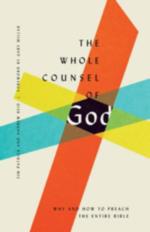
TIM PATRICK AND ANDREW REID
CROSSWAY, 2020
Tim Patrick and Andrew Reid have done us a great service in producing this challenging and practical apologetic for preaching systematically through the entire Bible. They recognise there are many good contemporary resources on how to preach. ‘Instead, this book is about what to preach, and about how to plan and manage a long-range, ordered, and deliberate preaching program.’ (p. 23) The authors’ foundational conviction is that God has revealed himself progressively, that these words have been inscripturated, and that they are sufficient for the establishment of his people and their ongoing growth. Most importantly, they argue that all of these words are necessary for the growth of God’s people today. So, ‘we wish to encourage preachers to make it their goal to preach the entire Bible because we are convinced that all of it is the word of God for us.’ (p. 22) They recognise that this is ‘a monumental ambition.’ (p. 23) Indeed, their argument ultimately leads to this challenge: ’All vocational preachers should set themselves the goal of preaching though the entire Bible over a thirty-five-year period.’ (p. 81)
Although not their primary purpose, Patrick and Reid argue refreshingly for preaching solely from Scripture, given its ‘inspiration, perspicuity, inerrancy, sufficiency and authority.’ (p. 224) They remind us of how fortunate we are to have the written word of God (p. 36) and, more particularly, they argue well for the authority of both the Old and New Testaments (pp. 52-58). The authors remind us of the need ‘to let the Bible set our agenda.’ (p. 71) They note there is a significant difference between saying, ‘What does God say about X?’ and ‘What does God say?’ Asking the latter question should ensure appropriate proportionality in our preaching and, concomitantly, in our theological debates and lives. It should ensure we are alert and committed to what God is alert and committed to, proportional to his revelation. Simultaneously, it should prevent us from making claims where God is silent. As preachers, it forces us to ask the questions, ‘Why is this passage in the Bible?’, ‘How does it contribute to the whole?’ and ‘What would we lose if it wasn’t there?’
Patrick and Reid argue especially well for preaching that recognises the progressive and cumulative nature of God’s revelation. In other words, preaching that lives and breathes biblical theology. ‘The goal is to understand the theology of the passage itself; where the theology fits into the progress of the revelation of God’s purposes outlined in the Bible, which find their focus in Jesus; how it engages with the theological priorities of the Bible already revealed; and how it contributes to further develop that theological revelation.’ (p. 91) In addition to the integration of biblical theology, Patrick and Reid also argue for the integration of systematic and gospel theology into the regular preaching series (pp. 94-101). On this basis they argue against, for instance, preaching a doctrinal series synthetically, or having special evangelistic sermons. Incidentally, I am very mindful that the biblical, theological, pastoral and homiletical skills required to preach through the entire Bible in this way are substantial. The authors exemplify the implementation of their proposed preaching program by dividing the Scriptures into six different sections and planning for series from a variety of genres throughout the year. Where there is more than one preacher, they discuss the principles by which they have chosen preachers for texts. For those at home in reformed evangelical contexts, their illustrative program will not be unfamiliar and is quite accessible. However, for those used to using the common lectionary, moving to their proposal will require significant change and congregational training, which they address on pages 223-7.
While having great sympathy for the overall thrust of the authors’ argument, I have wrestled nonetheless with some of the theological, pastoral and practical implications of their 35-year plan. While recognising that all of the Bible is God’s word and is helpful, I need more help in understanding how, for example, the food laws or the dimensions of the temple need equal treatment compared to the New Testament passages of their fulfilment. The theological question is also raised as to whether some parts of Scripture are more pertinent than others to God’s people at certain times and contexts. Of course, the danger is that many pertinent parts are avoided because of the preacher’s competence, disposition, theological position, contextual misreading, external pressures, or any number of other reasons, so one well understands the authors’ fallback position. Pastorally and practically, covering the Gospels and significant sections of the Old and New Testaments only once in 35 years may be unrealistic, even within a strong biblical theological framework, where one is constantly bringing to the congregation the biblical, systematic and gospel implications.
In our own Australian context, for instance, surely the issues addressed in 1 and 2 Corinthians bear repeating more than once every 35 years!
I wonder whether the authors may be placing too much freight on the sermon, even when it is accompanied by a weekly Bible study before or afterwards. Indeed, the book could be strengthened by more discussion of the place of the sermon within the broader task of training all in the whole counsel of God. Enabling families to train each other and their children, greater use of an adult Sunday School program, as is so ably done in many North American churches, greater use of a year or more at theological college and even greater encouragement of individual learning will take pressure off all that is being asked here of the sermon, which includes teaching, exhortation and evangelism. It would also give greater freedom to the preacher to use the sermon for those ministry aspects of the word of God for which it is best suited and needed in that particular context. Indeed, changing one’s focus from the sermon to training by numerous means for all in their various stages of life and discipleship takes pressure off the sermon while still giving it a high place in congregational life. Such a focus does ask more of a preacher. It means charging them with the assessment and implementation of a congregation’s teaching needs, including the preaching program. Nonetheless, that is the role we see Paul adopting in Ephesus, as outlined in Acts 20.
Such considerations aside, The Whole Counsel of God is a great encouragement to read, both for its affirmations and its challenges. Australians have much to be thankful for in terms of our contribution to biblical theology. This integration of biblical theology and preaching, with its practical call, takes this contribution to the next step.
Book Review: The Second Mountain: The Quest for a Moral Life
- Details
- Written by: Ben Underwood
The Second Mountain: The Quest for a Moral Life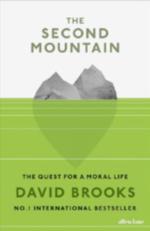
DAVID BROOKS
ALLAN LANE, 2019
I reviewed David Brooks’s book The Road to Character in the last Essentials. At the end of that review I mentioned that I was considering taking the chapter on Augustine to my Big Questions reading group, because of its attractive discussion of Augustine’s experience of God’s transforming grace. Well I did that, and my mostly non-Christian friends and I had a very good discussion there. Then when I picked up Brooks’s next book, The Second Mountain, it provided an illuminating personal backstory to the writing of The Road to Character, because as it turns out, Brooks has been on a spiritual journey, and during and since the writing of that previous book, he has embraced the Bible, the religious attitude to life, coming to faith in God, a Jewish-Christian identity, and even, almost—perhaps partially or waveringly—the resurrection of Jesus Christ. You come across this surprising story in chapter 21 of the book, entitled ‘A Most Unexpected Turn of Events’. But more of that a bit later.
Although it contains a chapter or so of spiritual memoir, the book is really a continuation of the project of his former book, about the spiritual impoverishment of our current culture’s moral ecology, and the possibilities inherent in discovering a better moral ecology. The term ‘moral ecology’ is a term for the systems of belief and behaviour that we live our lives in. These may be local, such as the culture of an organisation that rubs off on those in it, or they may be quite encompassing, such as the classical honour codes of the ancient world. As Brooks tells it, we have moved from an early-to-mid 20th century moral ecology he calls ‘We’re all in this together’, to a postwar, 60s-counterculture-influenced moral ecology he calls ‘I’m free to be myself ’. While this was an understandable shift, it has gone too far, and left us too self-focused. We live on what Brooks calls the first mountain, the mountain of life tasks: get an education, a job, a spouse; cultivate talents, reputation, success; seek personal happiness. But Brooks is convinced that we must see that there is a second mountain, and that mountain that is not about personal happiness but about moral joy; not about self, but about others, about communities. Our current moral ecology is too dominated by slogans like ‘You can do anything’, ‘Follow your dreams’ and ‘Make your own way there’. The problem is that at the outset we don’t know who we are or what ‘our own way’ might be. Nor do we have a dream to follow. We just don’t know what will deliver to us the life we seek. Freedom is not what we need, but rather we need a tried and tested road shown to us, and encouragement to walk it.
So Brooks wants to give a plan for life that is aimed at the moral joy that is the promise of life on the second mountain. The heart of the book discusses four commitments for a second mountain life. These are vocation, marriage, philosophy and faith, and community. These four commitments become the arenas in which we build a life which goes to work on us. Making these commitments integrates us so that we escape the empty moral ecology of the Instagram life (individualistic, aesthetic and insecure) and discover the richer moral ecology of the relationalist life (interdependent, integrated, assured). Commitments don’t erode individual freedom (as the hyperindividualist fears). Rather, our commitments actually give us what we seek, namely: identity, purpose, freedom and moral character.
Brooks carried me along with his enthusiasm, his urgency, his marshalling of anecdote, quotation, research and story. He gives the wisdom of self-help: how to get a handle on your life. He seeks to update and re-recommend the best of an old set of convictions about the centrality of commitment and community, of forgetting and submerging yourself in something bigger than you (‘we’re all in this together’). It is encouraging, heart-warming, inspiring. I think there’s good advice here, and the basic Judeo-Christian ethic is expressed well in modern idiom. The right life is to love: to commit to others in a deep way seeking to serve their needs and weave a culture of mutual love, leading to deep joy. It occurred to me that my teenaged son could benefit from reading the chapters on vocation and marriage (so could my daughter, but she’s a bit young yet).
But when Brooks turned to the long, very personal account of his awakening to faith, I was really engaged, and I ended up quoting Brooks in my Good Friday sermon: ‘I am a wandering Jew and a very confused Christian, but how quick is my pace, how open are my possibilities, how vast are my hopes.’ (p. 262). This book is influenced (strongly) by Christians and Christian ideas and convictions, and is written by a pretty famous Jewish New York journalist and writer who has discovered in Christians he encountered and the Christian perspectives he slowly grasped something unexpected, compelling, liberating and life-changing. His last chapter is an enthusiastic manifesto, bubbling and overflowing with newfound conviction about the importance of pursuing a different vision of the good life. Where his journey will take him is yet to be seen, but it is wonderfully interesting to watch him go.
It is also interesting to see Christians through his eyes, to hear what struck him, confused him, put him off or attracted him as he engaged with Christianity. Walls obstructed his progress. ‘I found that many of the walls in the Christian world were caused by the combination of an intellectual inferiority complex combined with a spiritual superiority complex.’ (p. 256. He names evangelicals explicitly here). He sees these complexes building four walls that hinder. First is a siege mentality, ‘a sense of collective victimhood’ amongst some Christians, The second wall is ‘bad listening’, where in dialogue we just ‘unfurl the maxims regardless of circumstances’. The third wall is invasive care, where ‘people use the cover of faith to get into other people’s business when they have not been asked’. The fourth wall is intellectual mediocrity, where’ ‘vague words and mushy sentiments are tolerated because everyone wants to be kind’. By contrast, Yale professors are ‘brutal in search of excellence’. (pp256-7)
Read this book for a thoughtful take on our modern predicament, some ideas for a different approach, for a modern spiritual memoir and also for a few perspectives on how Christians can appear to outsiders coming into our orbit.
Romans Chapter 8 Put Simply
- Details
- Written by: Ivan Head
 Romans 8 is a powerful affirmation of the way in which God is on our side. The Rev’d Dr Ivan Head seeks to make plain some of its depths. Rev Head was a member of the Sydney Diocesan Doctrine Commission for about ten years. He is a parishioner of St Jude’s Bowral NSW.
Romans chapter 8 from beginning to end affirms that God is for us—from our beginning to our end. I use the phrase God’s ‘for-us-ness’. William Tyndale, the Bible scholar and a primary translator of the Bible into English as it then was, coined the phrase ‘at-one-ment’ (atonement) to better translate Paul’s Greek language into an English New Testament (1526). His translations made a significant, creative change to the English language, both then and now.
In Romans 8, we discover that God is for us, and for us irrevocably. Paul exclaims that ‘It is God who justifies’ (8:33b). God puts right, and God is for us (8:3b), acting fully on our behalf, as one who would be our Father. Human salvation in Christ emerges, unshakeably, from deep within God’s time, from where God has anticipated and foreseen our core need that is now addressed and met in Christ (8:29-30). This provision consists not only of the death of Jesus as ‘God’s Son in the likeness of sinful man’ (8:3b) but most importantly by means of an unbreakable relationship established between the believer and the Spirit of Christ (by the Spirit of Christ) which Spirit indwells at the centre of the human person (8:11). Metaphors for closeness (inter-personal, spatial, and built), only take us so far at this point. For instance, if the Spirit of Christ dwells within us it may be more accurate to speak of an intrapersonal relationship.
Twice in verse 11 Paul refers to indwelling, to place double stress on this remarkable claim. Indwelling follows the raising of Jesus from the dead by the same Spirit of God, which is a pre-condition for the new relationship, and the new mind-set in the believer. It is remarkable to consider that the agent of the resurrection dwells within each human person awakened to faith.
At the beginning of this chapter (8:1-2), Paul tells us that God has provided for us in Christ. We read that God has removed us from the zone of negativity and penalty: ‘There is now no condemnation for those in Christ Jesus, for the law of the Spirit of life in Christ Jesus set us free from the law of sin and death.’ At the end of the chapter (8:38-39), Paul exclaims: ‘I am convinced that nothing in all creation can separate us from the love of God in Christ Jesus our Lord.’ This inseparability is remarkable and demonstrates the for-us-ness I refer to. Having said that the Spirit of Christ dwells in the believer,
Paul writes what may be considered one of the most profound statements in the whole of the New Testament. At 8:16 he writes: ‘The Spirit himself co-witnesses with our spirit that we are children of God’. John Wesley said that this testimony of the Spirit was immediate and direct. This aligns with the modern philosopher Alvin Plantinga where he asserts that ‘we are right to take belief in God as basic’. Belief in God can properly be the move the mind makes prior to all other moves—neither inferred nor deduced but given; and this is neither a prejudice nor a refusal to think.
Romans 8 is saturated with the word Spirit. The Spirit is both the agent of Christ’s resurrection and the agent and matrix of Christ’s unbreakable relationship with the human person. Paul uses the word Spirit more than twenty times in this chapter. A very specific renewal of the human person is outlined. The renewal exchanges one human mind-set for another (8:5- 9). One mind-set is purely human and closed in on its own resources. It may even be hostile to the very idea that there is a God. The new mind-set is informed by the Spirit of Christ which begins to co-form us. The indwelling Spirit literally informs us (8:29). The person in Christ is said to be conformed to, or co-formed to the image of God’s Son. Paul uses the word symmorphy which could pass untranslated into English, as has the word synergy.
Paul believes that men and women in Christ share a new destination that is achieved by God’s seamless intervention through Christ and the Spirit. This destination is not a goal or set of achievements in the modern sense of a better future made by human endeavour alone, a kind of utopia created by adopting self-help points, programs, or political policies. This destination involves an end to death itself. He makes this very clear in 1 Corinthians 15:26 where death is ‘the last enemy to be destroyed’. This challenges our imagination. For Paul, raising Jesus from the dead cannot stay confined to raising Jesus from the dead. This act is inherently an act of for-us-ness.
That death is said to be destroyed is profound. For us now, it is a reality at the limit. Death sits on our life-horizon. It is not something we have mastered or can master even with our best thoughts. We ponder it from this side of our own death, and daily we move closer to it. We know that the destination Paul hopes for and trusts in is not yet seen (8:25): ‘But if we hope for what we do not yet have, we wait for it patiently.’ Paul is hoping for a renewed human existence in a glorified creation where death is no more.
I offer three translations from the Greek text for Romans 8:17, where this claim is made.
King James: ‘And if children, then heirs; heirs of God, and joint heirs with Christ; if so be that we suffer with him, that we may also be glorified together.’
RSV: ‘and if children, then heirs, heirs of God and fellow heirs with Christ, provided we suffer with him, in order that we also may be glorified with him.’
NIV: ‘Now if we are children, then we are heirs—heirs of God and co-heirs with Christ, if indeed we share in his sufferings in order that we may also share in his glory.’
We can also translate this verse by picking up one element of the NIV in its use of ‘co’ in co-heir. Thus: ‘And if children of God, we are also heirs, heirs of God, and co-heirs of Christ if indeed we co-suffer that we may be co-glorified.’ I am using the prefix co- in the translations to stress the closeness of the Spirit which is sent to indwell (8:11) the human person. We must be careful not to self-isolate at this point. The Spirit minutely achieves our salvation from within us. However transcendent and mysterious, the closeness of the Spirit is real and as much internal to the human person as transcendent. Closeness and internality do not blend the identities of Christ and the believer, but neither does it leave the identity of the believer alone.
Paul wrote (Galatians 2:20): ‘I have been crucified with Christ, so it is no longer I who live but Christ who lives in me.’ The Greek verb has the same co- prefix (sunestauromai) which could be translated ‘co-crucified’ as much as crucified with. Using co- really focuses on the closeness that Paul says holds between Jesus Christ, the Spirit, and the believer. There is an inclusion that claims to be real. Paul stresses that closeness again in the challenging passage at Colossians 1:24 where he says ‘Now I rejoice in what was suffered for you, and I fill up in my flesh what is still lacking in regard to Christ’s afflictions for the sake of his body, which is the church.’ Romans 8 invites a longer study of the working out of the Spirit’s indwelling.
Paul’s trajectory across Romans 8 heads to the moment when ‘the children of God will be revealed.’ Believers will be revealed in a resurrection glory already seen in Jesus. The resurrection of all the dead is as important to Paul as the one-off resurrection of Jesus. This can be difficult for the modern Christian to realise but Paul says explicitly at 1 Cor 15:16: ‘For if the dead are not raised, then Christ has not been raised either.’ For Paul, neither makes sense without the other, however much the resurrection of Jesus is the core of all his content. At 1 Cor 15:17 Paul says: ‘And if Christ has not been raised, your faith is vain (empty, futile), and you are still in your sins.’
The NIV (picking up a specific phrase from the Septuagint Greek Bible) says that God’s own Son dies in the flesh ‘as a sin offering’ (8:3). From the moment of resurrection and our receipt of the resurrecting Spirit, God establishes a new, unbreakable relational bond with us. The Spirit makes us children of God and siblings of Jesus. Paul says that as a result, each person in Christ becomes ‘more than victorious’ (8:37). At 8:32 he asks: ‘will he not give us all things with him?’ This statement is focused entirely on an unbreakable personal relationship with God that holds throughout all the circumstances of life. Paul notes these extreme highs and lows in the last two verses of chapter 8 which once again stresses the unbreakable relationship with God. ‘For I am sure that not death, not life, not angels, not principalities not things present not things to come, not powers not height not depth not anything else in all creation will be able to separate us from the love of God in Christ Jesus our Lord.’
The inseparability in the Spirit of Christ and the believer may be the main point of Romans 8. In all these ‘nots’, those things that cannot break the bond of God’s love in Christ, we also hear God’s unequivocal ‘Yes’ as Paul said at 2 Cor 1:20: ‘All the promises of God are Yes in him’.