
Bible exposition
The Bishop as Preacher
- Details
- Written by: Paul Barker
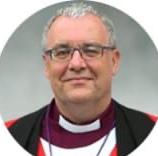 I preach every week, often more than once, and it takes me over 18 months to get to every one of my 82 parishes. Preaching is a highlight of my week, something that energises me and challenges me. I try hard to fit the expectation of length of sermon (between 12 and 35 minutes) and I have enjoyed the challenge of preaching shorter than I used to. I now use a stopwatch when I preach as it helps me keep to time better.
Maybe 60% of my parishes use the lectionary readings, which I fit into, preaching just one of the readings rather than something on them all. The remaining parishes are roughly split between asking me to fit into a sermon series or I have free choice.
My aim has been to write twelve new sermons a year, a low bar but the extreme busyness of the role, plus the ability to reuse older sermons, means I do not always succeed even to achieve this goal. In reusing older sermons, apart from adjusting the length of the sermon, I am trying to reshape the introduction and application to be more relevant to this particular congregation.
WHAT I MISS FROM BEING A VICAR
I have been an itinerant preacher for almost fourteen years, the last 6.5 as a bishop. I still miss two key things. Preaching to people I know. I always want to preach with love, and that was easier with people I pastored week by week. In addition, preaching to people I knew meant I could be more accurate and deeper in application.
I also miss preaching a series, building week by week through a portion of scripture. Each sermon now for me is very much standalone, and to a different congregation week by week. I miss the personal growth from working through some consecutive portions of scripture. I miss the more frequent opportunities to preach from the Old Testament. I have tried to create a few opportunities for additional preaching, with Lenten series on Sunday or midweek nights, a winter midweek Old Testament series, and the occasional camp or conference.
BEING ITINERANT
Being itinerant has advantages but also challenges. I am more explicit about Christ, especially in Old Testament passages. When I was a Vicar preaching a series, I could hint and suggest, I could anticipate the next week and build up to a series climax. Now, in standalone sermons, I have to be more explicit and make sure people see where the passage fits and leads to.
Being itinerant means that when preaching on a passage that has developed from earlier passages, I often have to do more unpacking of those earlier passages as I cannot always assume people see the passage in its literary context.
The other challenge is not knowing my people well. At least as bishop I return after a couple of years and get to the know the parishes gradually. However inevitably the application is broader and perhaps weaker. I rest comfortably with that, because I see other priorities in my preaching, which I come to below.
UPHOLDING TRUTH
When I was consecrated, I pledged to ‘maintain the Church’s witness to the resurrection of Christ from the dead, to protect the purity of the gospel, and to proclaim Jesus as Lord’. I take this seriously. My priority in preaching whichever passage in whatever church is to do exactly this.
I want people to have confidence in the gospel and an enduring commitment to Jesus. Many in our churches are uncertain in faith, inarticulate in theology and wearied in discipleship. In a societal environment increasingly hostile to Christianity, and in a global church environment that is conflicted on doctrine, I want above all to affirm Jesus, his sufficiency for salvation and his cosmic Lordship. By and large I do not seek to do that combatively or adversarially. Lifting up the glorious gospel of grace, highlighting the splendour of Jesus, in as compelling and attractive way as I can, is confidence-building, comforting and, I hope, convincing. It is what our church needs.
I stick to one Bible passage. Indeed I always have done. When I have taught preaching, I have argued that using other biblical references should only be for adding clarity or conviction. But I also stick to one text because I believe that people need confidence to read the Bible.
Cross-references, including floating through three or four lectionary readings, can erode confidence, as most people feel inadequate jumping round scripture. But as people see one passage opened up, being shown what is simply there, then my prayer is that they begin to see that the Bible is comprehensible.
I do not use my Sunday preaching in parishes to be about pragmatic issues or ministry, compliance, governance, mission action plans or diocesan priorities. They are primarily for preaching scripture, bearing witness to the risen Jesus that people may be drawn to him in faith, love, discipleship and witness, for his glory.
Bishop Paul Barker
Assistant Bishop, Diocese of Melbourne.
Preaching as a Team
- Details
- Written by: John Forsyth
 Preach the word; be ready in season and out of season; reprove, rebuke, and exhort, with complete patience and teaching 2 Timothy 4:2
PREACHING GOD’S WORD
One of the great joys and responsibilities of being an ordained minister is the preaching of God’s word to God’s people each week. The significance of this ministry is not just reflected in the amount of time we give to sermons in our Sunday services, but also the substantial and appropriate time spent in preparation. In many churches, this responsibility falls to the single vicar, rector or senior pastor. Many of my dear colleagues and friends in ministry face the challenge of faithfully preaching week in and week out without much of a break.
ST JUDE’S CONTEXT
In my parish of St Jude’s, we face a different context and a different challenge. St Jude’s is a multi-site and multi-staff church with 6 Sunday services across 3 sites, some occurring at the same time. Thus we need a number of different preachers each week to cover all our services. Additionally, we have 7 members of staff who are regular preachers, 3 who are occasional preachers, not to mention our ministry trainees and student ministers and we are even blessed with a vicar emeritus who is known to preach now and then. I am very thankful that we are very blessed with a large number of preachers.
HOW WE WORK OUT WHAT TO PREACH
St Jude’s is committed to expository preaching. This means that as we go through a book of the Bible, the main point of the biblical text being considered becomes the main point of the sermon being preached. The vast majority of our preaching is spent working through a book of the bible week by week.
Although we have six congregations, we have a combined preaching program for the whole church. I bring a draft program to the senior staff team and together we shape the preaching program for the coming year. Over a year we aim to cover a breadth of scripture. This usually means preaching through, a gospel, a New Testament letter, and a book from the Old Testament. Additionally, we preach through the Psalms over January. We tend to break series up to cover 6-10 weeks, with longer books being broken up into parts (eg. we recently preached through all of Romans over 4 years). We also write Bible studies for each series to enable our small groups to follow the preaching program.
There is also space for congregational ministers to choose their own preaching series for a set number of weeks These may be more topical or theologically shaped (eg. a series on “work” or the Apostles Creed etc).
HOW DO WE WORK OUT WHO WILL PREACH
Preaching is one of the fundamental ways of pastoring people entrusted to our care as shepherds. This means that our key pastoral leaders do most of the preaching. In our case this includes me as the vicar and the senior staff who lead campuses and congregations. The need for at least 2-3 different preachers each week ensures that most senior staff are preaching regularly and that congregations hear a variety of voices from the pulpit. We also create space for other staff, trainees and student ministers to preach 2-3 times per year. Having a team of preachers also allows our staff to serve by preaching at other churches from time to time.
OVERSEEING A TEAM OF PREACHERS
One of the challenges of being a multi-site church is that I am not able to see and hear all sermons preached on a Sunday. To address this challenge, we have two key strategies. Firstly, we have a weekly “Hour of Power” meeting for all the preachers who are preaching in 2 weeks time. This hour is spent exegeting the passage and discussing any initial thoughts and reflections. This gives preachers the ability to work together and allows more experienced preachers to guide those with less experience (iron sharpening iron). Secondly, junior staff are given feedback on their preaching and assistance if needed by the senior staff they report to.
While I know that not all pastors have the opportunity, I consider it a great joy to lead the team of preachers at St Jude’s. Not only am I blessed with hearing the scriptures expounded so carefully by my colleagues, it has also helped me improve my own preaching as we seek to powerfully bring the word of God to bear on people’s lives.
John Forsyth is Vicar of St Judes Carlton
Stop the pulpit - I want to get off!
- Details
- Written by: Lynda Johnson
 I have been ordained now for 23 years, but regularly preaching or speaking for longer than that. Despite having fantastic teachers at College, I have always struggled with appropriately and properly preparing sermons. Therefore, preaching becomes stressful. And I’m pretty sure I’m not alone in this. Sundays come and Sundays go with regular rhythm and to keep on facing 'let’s start again on another one' is a daunting task.
Why do I find it hard to start sermon preparation early, which would in theory, make it less stressful? I can’t answer that.
Well ... ok, I can answer that ...
- I’m lazy! (let’s be honest here)
- I get distracted with other urgent and important things
- And here’s the clincher ... I actually work best under pressure, so the less time I give myself the better I focus, and often the better product results. (I say that reservedly as I can’t really assess my own preaching).
But knowing that I work better under pressure, I reckon what really goes on in my subconscious is a purposeful pushing out of time to the last minute. Eek. The truth hurts.
I have been working in team ministry with my husband, Chris, for all our married life. We love it. We are grateful that our gifts complement one another. God is good. Some of this ministry was as a clergy wife before I was ordained, but having met at College we both knew and had responded to the call to full-time ministry. That was a long time ago, and we are now at retirement age. And that’s the other clincher for me. You see, we’re not yet retired as we had planned to be.
God gave us another assignment to fulfil until the bitter end - the magic ’70’ when clergy are called into official retirement. Our plan for retirement had been a long-held one. We knew the year it would be. That year has well and truly been and gone. And when I dig down deep (probably not all that deep really) I find there is resentment towards the 'not-yet-retired' fact. Eek. The truth hurts. Resentment to being in ministry!! How is that even a thing?
And so the preparation for preaching now feels even more pressured, because I know how long it has been since I’ve seen my kids and my grandkids. I know they are wanting more of me and I am certainly wanting to give them more of my time. But that is delayed, hindered.
I don’t think many people in the pews realise how much time is taken up in the preparation needed to preach a sermon, not just to write it, but also the preparation to actually preach it. It takes a lot of time to get nuance right, to get words right, to get delivery right. It is a significant chunk of our week. And there is no doubt it takes a toll on a preacher.
When we accepted this additional assignment from God, it was to the beautiful parish of Noosa. What’s not to love? Truth is, it makes any 'resentment' even more strange and untenable.
Interestingly though, during the nomination and discernment process to be here, we kept on hearing "we have a great history of excellent biblical preaching and we want and expect that to continue".
No pressure! But pressure it was. We had to perform, we were expected to perform, to a high standard, and 'produce' every week.
As someone who is Christocentric and Bible based there has always been a high understanding of preaching and an innate desire and call on myself to preach faithfully and as well as I could, so there was no real surprise that an evangelical parish would also want that from their preacher/s. Without wanting to sound pretentious, perhaps our previous parishes got reasonable preaching as a bonus, rather than it being a demanded expectation.
But here it was clearly an expectation and therefore brought increased pressure.
No wonder this inner self wanted 'out'. I don’t like this! Stop the pulpit, I want to get off!
But .... I’m still here. Still regularly preaching. I haven’t gotten off.
So why am I still here, and why haven’t I gotten off? Put simply, it’s because I know that I have been called. Even from my teenage years, I knew.
I still don’t get on to it early enough. I feel the pressure, but I also seek renewal in the Holy Spirit, and to my constant surprise, when I stand up at that pulpit I don’t want to be at, I want to be there. I love to be there. And people say 'thank you'.
And I say 'thank you' to my beautiful and faithful God who constantly amazes me by, somehow, using me. I don’t understand it. But I love it.
How, then, can they call on the one they have not believed in? And how can they believe in the one of whom they have not heard? And how can they hear without someone preaching to them? Romans 10:14
Paul says to Timothy: All Scripture is God-breathed and is useful for teaching, rebuking, correcting and training in righteousness, so that the servant of God may be thoroughly equipped for every good work. In the presence of God and of Christ Jesus, who will judge the living and the dead, and in view of his appearing and his kingdom, I give you this charge: Preach the word; be prepared in season and out of season; correct, rebuke and encourage - with great patience and careful instruction. 2 Tim 3:16 - 4:2
Lynda Johnson is Associate Priest at Noosa in the Diocese of Brisbane. She has been Chair of EFAC Qld for the past 12 years, and is a Vice President of EFAC Australia.
Preaching: Part 2 Mapping out your sermon
- Details
- Written by: Tracy Lauersen
 I’ll never forget my first sermon, preached in the student chapel service at Bible College. What a rookie sermon it was. The text was Deuteronomy 30:11-20 and I titled the sermon, Choose Life! It came off the back of a term of preaching training. If a sermon is a meal, that first meal I served up was heavy on exegesis and light on relevance.
But the congregation was gracious, and the Principal, David Cook’s, evaluation was not unkind. Preaching is hard work. It takes a lot of practice to work out how to do it well. Thirty years on, I’ve got a routine I follow but I still call preaching ‘that hard thing I love’. I love it because I am able, in preaching, not only to serve God’s people and bring glory to Jesus and because I also get to spend so much time diving into a God’s word for myself. But it’s still hard work. Hard work that is fruitful. The best kind.
When I was originally trained to preach, we were introduced to a template. It was great because it simplified a very complex process. I still use a template because it’s so valuable to have a method, but the one I use today incorporates more of the homiletical process and some pointers I find I need to make sure my sermons always get to Jesus, preaches to the heart and honours women as well as men.
In an earlier article I explained how I map out a sermon using that template. This is what it looked like recently for a Palm Sunday text: Mark 11:1-11. I was working on several texts that week for Holy week, and it struck me that the treatment of Jesus on Palm Sunday, followed by his condemnation five days later was an example of Cancel Culture at work. One day the crowd is passionate about proclaiming Jesus as Lord, five days later the same crowd is dumping him. Perhaps this explains late modernity’s rejection of Jesus and perhaps even some of us Christians are at risk of cancelling Jesus too when we think he is failing us.
Title: What is Cancel Culture and what can we learn from the way Jesus was ‘cancelled’? (A longer question than I usually like, but I do try to phrase the sermon as a question. It not only highlights its relevance but it helps the sermon come up in google searches when it is later posted on our website)
Introduction: Extended Illustration about J K Rowling being cancelled. Mention a few other people that have been cancelled. Explain the modern phenomena of cancel culture. Mention that Mark 11 and the passion narratives show that cancel culture is not a new phenomenon but an ancient one. Let’s jump into the text and take a look at it.
Context: Its Sunday, 5 days ahead of Jesus’ arrest. Jerusalem has swelled from 80,000 to about 2 million people for the Passover festival. People are hyped and hopeful. Jesus’ arrival fills them with hope.
The passage:
1. They recognise Jesus as a kind of King (Laying palm branches, singing hosanna). Explain why they recognise him as a king.
2. The ‘coronation’ of Jesus is a bit off (a donkey features!)
3. He really is a king (Old Testament references). The meaning of ‘Hosanna’ -literally ‘save’ and why we know Jesus really is the King. Why ‘hosanna’ was the right thing to call out.
4. No one welcomes him at the temple courts…and spell out what happens in a few days time and why both the mob and the religious leaders will condemn him and the Roman leaders won’t intervene to stop it.
What can we learn?
1. The toxic nature of cancel culture (its themes of tolerance, personal safety, back to J K Rowling and the line in the sand for people today). Link to Jesus and where he crossed the line for people.
2. Jesus didn’t cancel people and neither should we. Jesus cancelled sin, not people. Social media as the new ‘mob’. How Jesus called out truth, nonetheless.
3. We need to beware of being like the mob: overvaluing our sense of self, rejecting ‘truths’ that threaten us, cancelling those that no longer meet our expectations.
4. What are your expectations of God? Of Jesus? Of the Holy Spirit? Spell out common ones. I referenced the top ten Christian songs of 2022 and what they said about our expectations of God today. Are we at risk of cancelling God?
5. Following Jesus involves honouring him as true King. Are you prepared to do that even when he doesn’t meet your expectations?
Landing the plane: I read out the lyrics of the most popular Christian song of all time: Holy, Holy, Holy, talked about how it correctly honours God and used it as an inspiration for our own response to Jesus and a prayer to conclude.
You can download a copy of the sermon template at asinheaven.blog

The Reverend Tracy Lauersen is Rector of St Paul’s Warragul. Mid-year Tracy will take up a new position as National Manager, Families and Culture for the General Synod.
Preaching: Part 1: Preparing to preach
- Details
- Written by: Tracy Lauersen
Call me odd, but I’ve loved the adrenalin rush of public speaking since I was 3rd speaker on our high school debating team. There were a few speaking competitions I entered then and I also had some opportunities as one of the student leaders. But when I became a Christian in my twenties and trained for ministry, I found preaching training quite difficult. It was the enormous spiritual weight of what I was being trained for. The privileged role of sharing God’s words rather than my own, of opening up the Scriptures for people and helping them to both understand and to apply them to their lives is a high and privileged calling. Preaching flips the priorities.
Interpreting and applying Scripture correctly is far more important than speaking skills. Preaching also means applying God’s words to our own lives as preachers first. It is a weighty thing. I call preaching ‘that hard thing I love’.
It was my time spent training for ministry at SMBC (Sydney Missionary and Bible College) that was most instrumental in developing my preaching style. We had a chapel service just about every day at college and there were a number of opportunities to preach as a student there, and also on the annual college missions. I studied preaching under our Principal, the Reverend David Cook and John Chapman was a consultant in our preaching classes as well. Our text book was Haddon Robinson’s Biblical Preaching (Baker Academic). Serving for a few years as associate leader on Hat Head SUFM also gave me opportunities to open up God’s word for the team. David introduced us to a preaching template which I have adapted for myself over the years. The great value of the way in which we learnt to develop a sermon was that it did not require the consulting of any commentaries.
Commentaries are valuable but reading one can certainly squash your own voice. Commentaries are so good that one can feel a sense of obligation to follow them. They are best left late in the process, as a check and balance rather than a directional guide as we develop our sermons. What I will check routinely though is the Greek text for the New Testament, and a theological dictionary. (I use Accordance software for this).
Below I lay out my approach to each weeks preaching task in my parish, where I try to get this weighty calling right.
Time to work on the sermon. Mondays would be the best time to start, but realistically Wednesdays are usually the earliest I start the exegetical process. I won’t do a great deal at this point. I will simply read the text and the surrounding text a few times and start to think about what it means. Spreading the preparation out over a few days means the subconscious mind has space to process the text and I find this results in better ideas than when I compress all preparation into one block of time. For example, in preparing a recent sermon for Palm Sunday, the reading was about how Jesus was publicly celebrated one day and publicly condemned a few days later. My mind immediately went to modern day cancel culture and this influenced my sermon. On Thursday or Friday I will do most of my work on the text, testing out any ideas, using a template I’ve developed and I have linked at the end of this article. I rise early on Sunday and go over the sermon. I will whisper it in outline form to myself in my study (trying not to wake others!)
Work on the text. On Wednesday or Thursday, following the template, I take a fresh blank A2 sheet which I spread on my desk and on which I glue a small font printout of the text to the centre of the page (biblegateway.com is handy for this). This allows me to put all thoughts onto one sheet of paper over the next few days. It keeps the text as the focus and allows me to highlight and brainstorm. I know I can do all this electronically, but I find handwriting is the best for brain engagement and later recall. It also limits me so that I don’t end up with reams of paper by Sunday.
I jot a few points about pre and post context for the passage and then paraphrase the text, trying NOT to use the words of the translation. This is hard because the longer we are Christians the more religious words seem normal to us. In another recent sermon I tried to paraphrase a text about baptism without using the word baptism. Not easy, but it really helps the exegesis.
The next step is to identify the flow of the argument of the text. In the Palm Sunday text of Mark 11: 1-11 the flow is,
1. The crowd recognise Jesus as a kind of King (Laying palm branches, singing hosanna)
2. The ‘coronation’ is a bit off (a donkey features!)
3. He really is a king (Old Testament references)
4. No one welcomes him at the temple courts..a hint of what is to come
Next I look for key words and metaphors which might already be in the text. The secret is not to create things if you don’t have to, but rather use what God has given you in the text. In Mark 11, that’s a donkey along with the words ‘Hosanna’ and ’King’.
Next, I work on what Haddon Robinson calls the ‘Big Idea’ of the text. What is this text about and what is it saying about what its about? This can take me a long time to discern. Sometimes days. I will work and rework on this until I am satisfied I’ve got it right, and I won’t allow myself to draft anything further until its done. This is because the big idea, the subject of the text and its complements will dictate the structure of the sermon.
Without it, I don’t have a structure. With it, I have the bones of the sermon and more than half my work is done.
What remains is to consider the application and to fill in the flesh on the bones of the sermon. Working out the application can be easy or difficult, depending on the text, but I know that a weakness for me is to underdo the application. So I try to make the application take up half my notes on my A2 sheet and have as many points as I do for the outline of the argument.
At this part of the process I might consult a commentary or perhaps google the passage. I like the Bible Speaks Today Commentary series because it’s written with preaching in mind and sometimes suggests an illustration. I’ll be checking these to make sure I’m not way off track with my interpretation of the text.
Once all of that is done, I map out the sermon on a fresh A3 sheet which I will take into the pulpit. Again, it has the text pasted to the centre of the page to keep me focused.
Occasionally I will take a photo of my A3 sheet and preach from an iPad if I’m preaching offsite somewhere.
In mapping out the sermon, I will have three parts:
Introduction: An illustration or a question that I spend a bit of time on. I’ll also try to put something personal into this to break the ice with my listeners. Andy Stanley makes the point that in the first few minutes, people are deciding whether you are worth listening to, so you need some kind of hook and you need to show a bit of yourself for them to make that judgement. I’ll end this part of the sermon with the phrase – ‘what about you?’ I wonder if you find this to be the case…or I wonder if you struggle with this? Or something along these lines…. I’m trying to make the subject of the sermon relevant to them. The I’ll say something like ‘ its great that our text today addresses that….let’s jump in and look at the text..’
Body: I usually work through three teaching points, and I’ll usually illustrate or give examples for each one. I may apply the text as I work through it or I may have an equally long application after working through the points. Either way, application will have at least an equal number of points as what I think the text is saying.
Conclusion: This is often called ‘landing the plane’. I may do a few different things here. I may try to inspire people to imagine what our church or community or country would be like if we really applied this text. I may use a prayer to conclude. I may quote a hymn or I may summarise the main points and leave them with a challenge.