
 The order of Genesis 1 justifies the assertion of Isa 45:18 that the purpose of creating the world was so that it might be inhabited. Only in v. 26 does God begin to speak in the first person. Clearly the purpose of creation had been reached. In so doing he uses the word ‘us’ or ‘our’ three times and ‘let us make’, ‘as our image’, ‘in our likeness’. Like the other stages, the creation takes place in communication with other members of the Trinity (cf. 1:2, John 1:1-3). Human beings do not have the image of God since God has no image but are as the image of God. Thus, the text does not say anything about God’s likeness to the human being but only something about the human being who is in a relation of likeness to God. However, this analogy does not offer to us any concrete information about God.
In v.26 the quite distinctive ‘let us make man in our image' (Gen. 1:26), suggests the uniqueness of humankind as a species. The plural address ‘let us’ has been variously interpreted within the OT complex as a piece of fossilised myth - an address to the heavenly council, a royal plural, or an indication (cf. the Spirit in 1:2) of plurality in the Godhead. Christian expositors have tended to see it as an address to the Trinity. Such address does not fit the general Old Testament evidence but does the canon as a whole. In any case the singular unity of the divine being is reasserted by the singular of Gen 1:27.
The addition of the phrase ‘in our likeness’ in Gen 1: 26 seems designed to exclude any notion of an exact copy contained in ‘image’ while seeking to convey the idea of some resemblance either in nature or more likely, in function. The connotation of the term ‘image’ is thus weakened by the addition of ‘likeness’ probably in the interests of avoiding the potentially idolatrous idea of an unqualified ‘in our image’.
The Hebrew term tselem ‘image’, always in the Old Testament, as well as beyond it, conveys the note of visibility. Basically the Akkadian cognate tsalmu refers to a statue in the round and to a representation rather than to a model or a copy. However, even though the emphasis in the term ‘image’ is on externality, we need to remember that humanity in the Old Testament is always a psychic unity. Thus the word refers to the whole of humankind viewed in terms of a representative function in the world.
Man as a species, humanity, is on view. While ‘image’, therefore cannot be narrowly understood as rationality, intuitiveness, personal awareness etc., but if the term refers to the whole human being it must include such things. We should preserve the translation ‘in our image’ but note the implications of the ‘in’. If the ‘let us make man’ of v. 26 is a heavenly self-address by the Trinitarian God then the ‘our image’ which, in some sense humankind is to reflect and in which he is made, is in heaven and possessed by the Godhead alone. As made ‘in’ the image, mankind will thus be simply an image of the heavenly image, a representative of what is divine. Since Col 1:15-20 speaks of the eternal sonship of Christ as being the pre-existent image of God, some hint is thereby given as to the real character of the image on view here. Given the nature of man as described in the Old Testament, ‘image’ in 1:26 refers to the whole person, but with the major emphasis falling upon relational function. In both Egypt and Mesopotamia in the ancient world the notion of mankind as the image of the deity was well known. In Egypt, the Pharaoh of the day was regarded as the image of the creator god Re, and as the incarnation of Re. In Mesopotamia the term image was commonly used to refer to the statue of a god or king, but when used in priestly or royal designations, the human representative on view was presented as the possessor of the power and authority of the god.
The exact phrase ‘in the image of God’, occurs only again in the OT at Gen. 9:6 in an important account which indicates God will continue with his intention of Genesis 1 and 2 so that post-flood humanity will commence again in the new beginning of the relationship with God but with a different future possible than that of Gen 6:1-17 before them. The similar phrase at Gen. 5:3 indicates that being in the image of God is a representative function of a paternal relationship transmitted by procreation.
Original sin will thus be the continuance (by spiritual connection) of the transmitted ability for humanity to refuse, as Adam had done, obedience to the divine will made clear in successive covenants, all drawing upon the basic premises of Genesis 1-2.
As made ‘in’ the image, humankind individually (5:1-3; 9:5-6) will be simply an image of the heavenly image, a representative of what is divine. Additionally, Gen. 1:26c is to be translated as a purpose clause ‘in order that they may have dominion’. Gen. 1:27a,b recapitulates Gen. 1:26 but Gen. 1:27c with the return to the plural and the addition of biological terms for male and female anticipates and signifies the ‘male and female he created them’. On this view, gender distinctions would form no part of the image. The sexual distinctions referred to in 1:27c are not a component of what is meant by creation in the image, while unlike the animal species humanity is not instructed to reproduce after ‘its kind’. Verse 27b may be more than simply a repetition of verse 27a and may anticipate the blessing conferred in verse 28. ‘Image’ thus appears to confer kingly distinction on humanity as a whole with humanity in a special relationship to God then being differentiated by the gender terms. Mesopotamian analogies to which we could appeal indicate that the king as an image of the deity was conceived of as a servant of the gods, and the phrase referred to his royal function as having a mandate from the gods to rule and thus as one possessing divine power. In Psalm 8:5 with clear reference to Genesis 1, humankind is depicted in kingship terms (cf. Pss 29:1 4; 90:16; 104:1; 111:3; 145:5; Job 40:10). The allusion in Psalm 8:6 to all things being put under the feet of created man is to an ancient Near Eastern symbol of submission to authority (cf. Josh 10:24; 1 Kings 5:3; Ps 110:1). Finally, ‘have dominion’ in Gen 1:28 has reference elsewhere in the Old Testament to the exercise of kingly functions (cf. 1 Kings 4:24; Ps. 72:8; 110:2; Isa.14:6; Ezek. 34:4). The notion of image as referring to royal authority is attested in both Mesopotamia and Egypt.
The creation of man in Genesis 1 thus climaxes in his presentation as vice-regent set over creation. The account stresses the essential dignity of the image, and authority, which is not lost as a result of the fall (9:6). As an expression of their difference man is created to be rulers in their domain and, in view of their role in the garden in chapter 2, to be priests, kings and priests. The human rule over creation, will include that over all living creatures, fish, birds and land animals, with no reference however to wild animals, is thus clear from the later meditation of Psalm 8 as well as from the language of Genesis 1:26-28 (‘have dominion’ and ‘subdue’). If the Fall robbed human beings of this function, we would expect the biblical doctrine of redemption partially to restore it. The presentation of Jesus in the New Testament both as the image of God and as true man points to what individuals in Christ will become.
With ‘image’ human beings have something in their nature like God and then the question arises as to what is this something, a physical correspondence or a spiritual likeness? Some suggest that the likeness is functional, that human beings rule. However, it seems to be incorrect to separate essence from function for what becomes is humanity as a whole, a relational being. The human being both is and becomes the image. But passages such as Gen 5:3 and Exod 25:40 show that image is the work of God of creation. Man is so made that he resembles the divine image. Thus image refers not to visible likeness but to the mental and spiritual qualities man shares with his creator. It is hard to pin down what these are; reason, personality, free will, self-consciousness or intelligence? There are too few references to image in OT to make final judgements.
However it seems image is not a double or a derivative and is different in kind from the original. Humankind created as the image is understood to have a mandate from God to rule and hence possesses divine power but is not itself divine. Humanity is yet the creature and yet has rule over other creatures. Verse 27b by its description of male and female man finds a location among the creatures, which prepares for the blessing of v. 28. This statement, though it is one which is assumed for all other creatures, must be inserted because of the image theology which has preceded and thus, though exalted over creation, it needs to be understood that humankind are still creatures. While also unlike God but like the other creatures humankind is characterised by sexual differentiation.
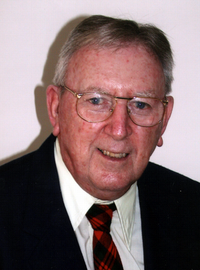
Dr. Wiliam Dumbrell (excerpt from an unpublished manuscript in the Editor’s possession)
Bill Dumbrell (1926-2016) was on the faculty of Moore College from 1963-1984, including serving as Vice-Principal for 10 years. He also taught at Regent College Vancouver and Trinity College Singapore.