
Evangelism
Training in Evangelism Today
- Details
- Written by: Gavin Perkins
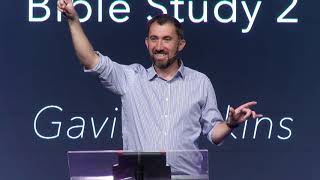 How do we best train people in personal evangelism today?
In a recent survey of our church it emerged that the vast majority saw personal evangelism as their individual responsibility (83%). It seems that very few had bought the line that evangelism was only for the specialists or the especially gifted. The average parishioner knew it was at least partly their job. Yet, in the same survey it also emerged that at least half that number had virtually no spiritual conversations with non-Christians in the previous year. Not unexpectedly such a situation leads to an ongoing and constant low-level sense of failure and frustration: “I want to share Christ, I know I ought to share Christ, and yet I rarely do it”. In the same survey most (84%) felt comfortable to clearly explain the gospel, and whether we agree with this assessment matters little in regards to a conclusion that a sense of inability to share the gospel does not represent a primary barrier to speaking.
How Are We Going with Evangelism?
- Details
- Written by: Julie-Anne Laird
 Recently, in my role as Chair of Lausanne Australia, we gathered 330 key leaders around Australia and I asked people to vote on how we're going with evangelism? In each State, the agreed amount was either 2/10 or 3/10. People really feel like we are failing in evangelism. In my other role as the Specialist Consultant for Evangelism and Mission for City to City Australia, I've been going around to Churches and helping them try and turn around with evangelism. This has been so good! But similarly, people really feel like we are not doing well with evangelism. Here's a few things that I've observed...
1. We Need To Pray
The thing to note is that Christians have a real heart for their non-Christian friends and would love them to know Jesus, but they feel inadequate to speak and they have lost the burden to pray. I often say, it's like we've given up on God, that he could possibly draw our friend or family member to Himself. All revivals start with prayer, and I feel like things are shifting in Australia. We know we are not doing that well now, which is a good posture to have because we know we need God. Really, this should have always been our posture but somehow, we think we can do it without God if we are not praying.
Art, Cars, Coffee, Mission, and Mental Health.
- Details
- Written by: Rev Adam Gompertz w. Rev Dr Chris Porter
A Chat with the Scribbling Vicar
Psychiatric nurse and car designer come historic car artist, Station Chaplain to Bicester Heritage, pioneer missionary, and minister to the classic car community through the REVS meetings and REVS-Limiter online group, the scribbling vicar Reverend Adam Gompertz talks faith, mission, and mental health.
Chris: Moving from nursing to car design, ordination, and now as a pioneer minister is a rather large series of shifts. How did that come about?
Adam: I grew up with parents who were vicars, but like a lot of vicar’s kids I didn’t really think of ministry, and ended up getting into the car industry via a long and protracted process via psychiatric nursing. Once I was in the car industry it was prompted through a period of redundancy in the 2008 recession. There wasn’t an angel standing at the end of my bed with a flaming sword, saying “It’s you, it’s you.” Rather it was more that we started looking and the doors kept opening. I was accepted for the selection course— which I liken to the SAS except with more cake and less diving through windows. But between selection and hearing back, I had started at Rolls Royce Motor Cars and really had to make a choice. But at that point I had no pioneer leaning at all. I thought I would be a vicar in a country church in rural England and that was it.
While in the car industry, I had a sense that when you went to theological college you left your old life at the door and walked into a new life and suddenly turned into a priest. The problem is that I could never leave the cars behind. I never quite fitted in that way. I still loved the cars, and the whole scene. During college I started reading works on missionality and church, like The Shaping of Things to Come, and that blew my mind. The picture of what ministry could look like, and what ministry needed to look like in the age in which we were living. From then on, I started thinking rather than walking away, what could I do to go back into that community as a priest. That really started my thinking.
Chris: The automotive industry and classic cars tends to be a far more diverse space than what we see on a Sunday. How did you end up being a clergyperson in that space?
Adam: When I went and did my curacy, in a very wealthy area, the vicar said you are going to have to deal with people driving around in Ferraris and Aston Martins, and I was like “sure, fine, no problem.” Back in 2014 I asked him to do a car show in the church. We had 28 cars, opened the church, served food, and made sure everything was free so that people didn’t think we were after their money. At the end of that someone said to me “you know this is only going to get bigger” and I thought “this is it, we are done;” but sure enough we doubled in size each time we held it. Yet it was tough to grow relationships with an annual event, so we moved to a monthly Cars and Coffee meet in Shrewsbury. That first REVS group has just grown from there, and quite naturally I just fell into this pioneer role as God opened the doors bit by bit.
I had spent quite a bit of time in my teenage years trying to marry having a faith and being a car fanatic. Can you be both? Because I thought that surely cars are very materialistic. Over these years I have come to a position that, yes, you can do both; and perhaps in the church we should stop dividing ourselves up into our work life and spiritual life etc. I feel just as called on a Sunday morning to be in a carpark peering into somebody’s engine bay as I do in a pew. I think it’s a by-product of our evangelical underpinnings, where we see God purely in terms of church, but He is out there doing stuff and calls us to join in; often in the most surprising places.
I have just as many encounters with God around cars as I have anywhere else. Because cars give space for a community to walk with people through the highs and lows of life, and for me that is my calling. Not so much to preach at people but called to walk with them, weep when they weep, and to celebrate when they celebrate; all with the perspective of God’s kingdom.
Chris: How have you found the reception of your faith and reflections on faith in such a secular space?
Adam: When I put things out, like a Fuel for Thought, there will be people in the group who are way off the spiritual radar, others who are curious, and others who are onboard. The challenge then is how do you talk about Jesus in a way that people won’t switch off,
but a way that puts it in their language. One of the things with REVS that I felt called to ask was “what does the kingdom of God look like in a car community?” For me, that is one of the key questions that I go back to. Aspects like radical generosity, compassion, healing, forgiveness, and wholeness. What do they look like in the car community? The Fuel for Thought reflections seek to do that, and to meet people where they are at.
Church language just doesn’t work in this space, people are so unfamiliar with it, or have a simplistic one-dimensional understanding. Instead of typical church language we talk about “rust,” and “restoration,” all grounded in the car stuff that we know and love, and from there we can ask questions.
It’s what Jesus did, taking the language of fishing, planting seeds, building houses—the language of his every day—and applied the gospel to what people are familiar with. With REVS we do a “Carols by Carlight,” and use metaphors of journeying, like the Pilgrim Tour along an ancient Christian pilgrim route in North Wales. I liken it to being bilingual, speaking the language of our host culture, and being familiar with the church and theological language.
Chris: One of the challenges with car culture is that there is often a self-reliance, a stiff upper lip, and people don’t want to talk about their struggles. How have you seen REVS speaking into that space?
Adam: I think that initially it is rooted in my own walk with mental health, in that I have struggled with anxiety and depression and obsessive-compulsive disorder for around 25 years now. It has become part of our life, as a family, and we have learnt to manage and live with it. Part of my ministry came from sharing that story, and from the fact that after a major breakdown I have had the sense of God restoring me bit by bit. I just started telling my story.
Psychiatric nursing gave me an awareness of mental health, but it was my own story and God’s restoration that really promoted it. REVS really is a story of God’s restoration, it’s not a story of my own ministry, because several years ago I really thought that I was on the scrapheap.
Telling my story was the first stage, and then meeting others with a similar story, paired with a general cultural willingness to start talking about mental health. COVID and lockdown certainly had a knock on effect with people’s mental health and gave space for talking. The REVS-Limiter online community itself was borne out of our shared lockdown frustration. Charlotte—my wife—asked me one day why I was grumpier than usual, and I said, “because I can’t get the car out and meet with others,” so she suggested taking it online. I remember thinking that if I get a few people watching along it would be amazing, and by the end of the first event we had almost 3000! We made sure we talked about mental health, offered prayer, and finished each event with a prayer of blessing. REVS-Limiter doesn’t hide faith away, instead people know that as a vicar I am probably going to mention Jesus at some point, and people are open to it.
Chris: The Barna group recently found that 42% of those in ministry have considered quitting in the past year alone. Pioneer ministry is often seen as this super high stakes environment. How has the REVS ministry been a blessing to your own mental health?
Adam: Like any kind of ministry, it has its demands, and it sometimes feels like we are just making it up as we go along. Some things work, and you are amazed; then other stuff won’t. There is a great deal of introspection, which comes with ministry anyway, but heightened because this is new and different, and a sense of wanting to do things right. All things which play into my anxiety. Here the artwork that I do is great, not just as a tool for starting conversations, but also to switch off and refresh myself. But I have to be careful with my art, that it doesn’t just become another ministry tool and kill my enjoyment of it. There is a challenge with having refreshment so close to ministry. It really takes some discipline, especially as the ministry keeps expanding.
Chris: What advice do you have for others who want to engage in pioneer ministry?
Adam: You can do the same with anything. People who run groups which are all geared around baking bread or making stuff to eat, others doing stuff with animals. Dog walking is a massive way to meet people and becoming a community of some kind. In some ways I am not doing anything radical or different, certainly not from Jesus did. I’m just doing it in a different context. With REVS we talk about being community, we aren’t a car club, but a community that is open and welcoming and allows people to celebrate their own piece of car culture. Just trying to model the kingdom of God in this space.
When I was first thinking about REVS, a friend of mine advised me to be straight with where you are coming from. Because there is nothing worse than going to something and finding that you have been pulled into something else. The bait and switch of “come watch a film… oh it’s a film about Jesus.” People know where I am coming from, and who I represent. Sometimes that busts their ideas about what a vicar represents. With REVS-Limiter we say that there will be faith posts there for you to think about and reflect on, if that isn’t your thing just pass on by, but there might be something to engage with. Being up front with it leads to things like being on a podcast and having the hosts open up about their own faith journey, or others praying for people who are struggling or have had their car stolen. We need to take faith into people’s lives and go be where they are at rather than expecting them to be where we are at. Like mental health it is all about just being honest and saying, “this is me.” When you are in that space, then get people around you. For so many clergy there is a sense that they are the only ones who do ministry. Particularly within some of our more middle-class churches we have inherited this model where people come, sit, and go and that is all their involvement. Actually, that is not the church that Paul was talking about or that Jesus started, where people came, got involved, became an active community, involved in every area of life. We have made it very personal and private, with the vicar doing all the ministry. It is little surprise that many get to the point where they just can’t keep going on like that. Certainly, in the UK we have significant clergy burnout, as there is no one to help and support. With REVS I was getting to the point where I realised that the ministry needed more than just me to be involved. I have a very good group of directors around me, who are keen to release me to do the bits that I am good at and know me well enough to support my mental health.
Adam Gompertz is Station Chaplain to Bicester Heritage, and @revslimiter on Social Media
Interview with Ben Wong
- Details
- Written by: Mark Simon
Interview with Ben Wong - Chinese Ministry Coordinator in the Anglican Diocese of Melbourne
Mark Simon speaks with Rev. Canon. Ben Lui Wong, Chinese Ministry Coordinator, Anglican Diocese of Melbourne, and Senior Minister, St. Timothy’s Bulleen and St Mark’s Templestowe Anglican Churches.
Mark: How did you become a Christian?
Ben: I was born in China, grew up in Hong Kong, then came to Melbourne for study. It was here I met Ivy, who later became my wife. She was a Christian, and in the early years of marriage, I just dropped her off at church but never went in. One day a woman specifically came to me and invited me in. During that first service I attended, a very strong voice came to my mind saying, ‘you will be like that person on the stage speaking to others.’ The minister encouraged me to get to know Jesus before taking steps to become a preacher! So I joined a course, and came to put my faith in Jesus, and 8 or 9 years later, I did become ‘that person’ proclaiming the gospel to others.
Mark: Have you always had a cross-cultural ministry, or did you grow into it?
Ben: When I first graduated from Bible College, I thought I would primarily use Cantonese and Mandarin, and reach native speakers of those languages in Melbourne. But when I became a Youth Minister in the Chinese congregation I needed to relate to Australian-born Chinese kids, who were using English as much as Chinese. So my vision widened. Now I am the minister of a multi-site church with English, Cantonese, and Mandarin services. If God had shown me that too early, I might have run away from it.
Mark: Do you think Chinese or other immigrants in Australia are more open to the gospel at the moment than Anglo-Australians? Why might that be?
Profile: Lonny Bendessi
- Details
- Written by: Mark Juers
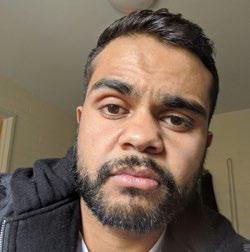 Aboriginal Christian and growing leader, Lonny Bendessi, shares his remarkable story with Essentials
WHERE ARE YOU FROM?
I was born in Adelaide. My family on my mother’s side is from a small place called Ceduna, which is 800km far west of Adelaide, we’re known as the West Coast mob. My father is from Western Australia, his mob are the Wongi mob from Kalgoorlie. I’m the second child of four in my family but I have a lot of cousins and we all call each other brother and sister. I found out I had a lot of first cousins who spoke English as a second language, they’re living out bush and wouldn’t live in the city.
I grew up in Adelaide until the age of 5 then Mum told me we’re going to Ceduna because that’s where we’re from. I stayed there until the age of 9 and that’s how I found out who I was, and that my people are the Wirangu people in the south and the Kokatha people just north of there. We stayed in a small community called Koonibba. It was interesting growing up there, as kids we would run amuck, didn’t care about anything, it was freedom. At home sometimes you’re surrounded by alcohol and violence but my mum and my cousins we all had each other. We’d all jump on our bikes to go out bush, ride around the whole community, make BMX jumps and climb trees.