
Book Reviews
Book Review: Repackaging Christianity: Alpha and the Building of a Global Brand
- Details
- Written by: Peter MacPherson
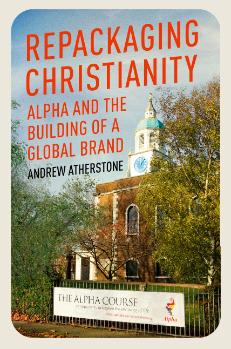 Repackaging Christianity: Alpha and the Building of a Global Brand.
Andrew Atherstone
Hodder & Stoughton, 2023
Reviewed by Peter Macpherson
This is an easily readable account of Alpha’s origins and development over the past thirty years. The title might suggest it is a polemic but in essence it is a history. Andrew Atherstone, after all, is a serious ecclesiastical historian. He is Professor of Modern Anglicanism, Tutor in History and Doctrine at Oxford University and Latimer Research Fellow at Wycliffe Hall. He lists his major research interests as “Anglicanism and Evangelicalism between the 18th and 21st centuries.” Although this is not a long book it concludes with 53 pages of endnotes, detailing Atherstone’s reliance on archives, diaries, interviews and parish magazines.
Alpha began in the late 1970s as an in-house discipleship course at an Anglican church in London called Holy Trinity Brompton (HTB). It was described as “a course on Christian foundations … designed to help those who want to go on in the Christian life” and had six sessions. The curate, Charles Marnham, ran the course in his flat above the church hall and food was provided because those attending were often coming straight from work.
Read more: Book Review: Repackaging Christianity: Alpha and the Building of a Global Brand
Book review: The Body God Gives: A Biblical Response to Transgender Theory
- Details
- Written by: Tim Collison
 Robert S. Smith
Lexham Academic February 2025
Reviewed by Tim Collison
Debates about ontology should be nothing new to Anglicans. Fifteen (depending on how you count them) of the Articles of Religion deal with the nature of what a person or an element is. The Articles’ concerns about how we see God, humanity, and what the sacraments are (or are not) demonstrate that trying to understand the nature of what things are is central to our understood identity.
We should then be equipped one, would think, to be able to participate in discussions about transgender issues. I suspect the reality is that most of us struggle with this. Either because we are concerned what people will think about what we might say, or we are unsure what we ourselves might think about it. It may even seem like it is not an issue we need to wrestle with. I doubt that there are many people in our congregations who are transitioning. Yet most of us will either need to provide pastoral care to enquirers about faith who are transitioning or answer the questions our congregations might have about this issue.
Read more: Book review: The Body God Gives: A Biblical Response to Transgender Theory
Book Review: An Audacious Adventure
- Details
- Written by: Richard Trist
 Paul Arnott
Direct from author:
Reviewed by Richard Trist
As you look at your bookshelves at home, or in your kindle or iPad libraries, do you see any Christian books written by Australian authors, or published by Australian publishers? Anything by John Dickson, Leon Morris, John Chapman or Robert Banks? Anything published by Matthias Press, Acorn Press, Albatross Books, National Church Life Survey? Anything purchased from an Australian bookshop such as Koorong, Word, Open Books, or the sadly missed Ridley College Bookshop?
Paul Arnott’s latest book, An Audacious Adventure: Independent Australian Christian Publishing, narrates the story of Australian Christian publishing over the past 50 years. It honours those in the past who stepped out in faith (often on a shoestring budget!) to promote Australian authors. It also points forward to the next generation of writers and bloggers and podcasters who will help shape the Australian church into the future.
Arnott begins the book with the story of On Being magazine, published in Melbourne by Baptist pastor Kevin Smith in the 1970s. This non-denominational evangelical publication was very influential in its time, with an estimated readership of over 35,000 people. I remember as a young, isolated schoolteacher living in country NSW, eagerly awaiting its delivery each month. It was a heady mix of news items, articles and stories, and sought to bridge the gap between biblical conservativism and social radical activism. Arnott suggests that although at times accused of being anti-church, it had the welfare of the church at its heart and, unlike social media today, was a forum where contentious issues could be safely discussed. Financial constraints caused its closure in the early 2000’s.
The next chapter, “Five determined Anglicans”, is the story of Acorn Press, and a famous meeting in 1979 where John Wilson, Kevin Engel, Alan Nichols, David Williams, and Janet Wyatt, each laid down a $100 note, to commence the new enterprise. They saw the need for Australian Christian writers to be published locally rather having to seek an overseas publisher. From that modest beginning Acorn Press went on to produce bestselling books such as Bishop Ray Smith’s People Caring for People, Charles Sherlock’s Pastoral Handbook for Anglicans, and the popular songbook Praise for All Seasons.
The stories of Albatross Books, ANZEA Publishing and Scripture Union are covered in the next chapter. Arnott deftly explores the perils and pitfalls of independent publishing, and how decisions to partner with bigger overseas publishers (in the case of Albatross with Lion Publishing from the UK) had some devastating consequences. I found his interviews with many of the Albatross authors inspiring, especially their processes of turning ideas for a book into reality. An encouragement for all of us who aspire to write.
Probably my favourite chapter was the one describing the genesis of Matthias Media, which continues to be such an important resource for evangelicals today. I was astonished to read that its well-known evangelistic tract Two Ways to Live has sold 4.1 million copies worldwide and has been translated into Chinese, Spanish, Japanese and French. Arnott suggests that the key to the success of Matthias Media has been Its prioritisation of conservative theology and its resistance to commercialisation. It has been strategic in avoiding an over-reliance on generating sales only through Christian bookshops, instead building direct links to customers through conferences and focussed marketing. It is an amazing story!
Much more is covered in An Audacious Adventure including a discussion on the importance of Australian Christian newspapers and journals including New Life, Zadok Perspectives, and Eternity. and the decline of quality Christian print literature in a shifting media landscape. He also describes the downside to the rapid loss of Christian bookshops across the country with only one dominant player remaining, Koorong Books.
Paul Arnott is to be congratulated for undertaking this task of recording the rise and fall of Christian publishing in Australia, and for exploring what this might mean for the future. The book is a worthwhile read and will appeal to anyone with an interest in writing, publishing, and engaging Australians with the gospel.
Richard Trist is Chaplain to the Anglican Institute Ridley College.
Book Review: Becoming the Pastor’s Wife
- Details
- Written by: Alexandra Phillips
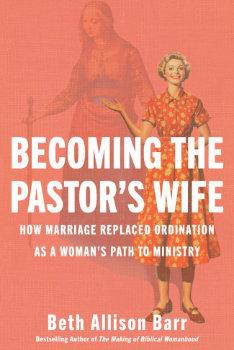 Becoming the Pastor’s Wife
BETH ALLISON BARR
Brazoz Press, 2025
Reviewed By Alexandra Phillips
Herself a pastor’s wife and historian, Beth Allison Barr challenges the contemporary Southern Baptist Convention (SBC) notion of ‘pastor’s wife’ from within. Her book is a timely, welcome contribution to conversations on the role of women in leadership. Barr questions the wisdom of narrowing the pastor’s wife role to supporting a husband’s ministry, and argues its recent evolution is associated to the decline of female ordination. Whilst offering a leadership opportunity for some women (albeit subordinate), the pastor’s wife role deauthorises women’s independent leadership. Barr persuasively objects to this being considered a biblical role, noting the Bible’s silence on the role performed by wives of ministering husbands, like Peter’s wife. Barr also protests the claim that alternative church leadership roles for women are nonbiblical, pointing to women with authority like Prisca and Junia, whose ministry shows no signs of dependence on a husband in ministry. Likewise, she reveals historical women in church leadership. Barr builds her case compellingly through chapter after chapter of illustrative stories arising from an eclectic mix of history, a survey of ‘pastor’s wives’ literature and her personal experience, inviting the reader’s reactions along the way.
As a historian, Barr complexifies statements about women’s ordination across the ages. She notes its contemporary understanding is a recent development, disagreeing with powerful SBC leaders like Al Mohler (president of the Southern Baptist Theological Seminary). Though Barr’s flow within chapters is occasionally convoluted as she overdoes suspense or draws out her evidence, she ably holds a wide gaze on history by contrasting women’s ministry and ministry titles from different time periods. From the early church-fifth centuries, she uses archaeological evidence to tell of women in church leadership, including performing the eucharist. Next Barr concludes mid-seventh century female superior, Milburga, had a comparable position to a bishop, in her rule over a double monastery (monks and nuns). Then Barr neatly explores how ordination reforms in the 10th-12th centuries linked it to the powerful position of performing the eucharist, requiring a sexually pure unmarried male priest. As medieval priests hardly pursued sexual purity, the result was the debasement of women. Later, though male protestant reformers married, they kept a position of ‘masculine authority’ gained from having an exemplary wife, which led to the origin of the subordinate pastor’s wife position.
Barr then rigorously examines SBC history, demonstrating the influence of particular people, events and resolutions that rapidly and recently turned the tide on the SBC position. Where it previously recognised women’s ministry, both through ordination and just payment, it then defunded churches with female pastors. Barr records Dorothy Patterson’s sway, pushing the complementarian agenda for the white evangelical pastor’s wife, through seminary lessons in which wifely submission was presented as the woman’s highest calling (including training on packing a husband’s suitcase, housekeeping and sex). Far from agreeing that women’s pursuit of church leadership is culturally influenced, Barr suggests capitalism and the 19th century rise in domesticity of women’s work as influential to the SBC notion of the pastor’s wife. As ‘godly woman’ became equivalent to ‘good wife’, she draws the parallel to ‘women in ministry’ becoming ‘wife of a minister.’ Barr clearly establishes links between the growth in submission language in pastor’s wives’ literature and the complementarian Danvers statement (1989), Piper and Grudem’s book Recovering Biblical Manhood and Womanhood (1991) and the ‘submission statement’ (1998) added to the SBC confessional document. She uncovers how the recategorization of ministry workers for tax exemptions led unwittingly to controversy over women’s ministry titles, positions and payment. Thus, as women’s independent path to ministry became more difficult, the pastor’s wife model of service ‘covered the absence of female pastors.’ This resulted in the loss of authority of women’s leadership, and women’s leadership becoming subordinate by definition.
Though Barr regrets the bleakness of the SBC trajectory she uncovers, she closes with stories of hope from church history and the not-too-distant SBC past. She also provocatively suggests that if the white church’s pastors’ wives modelled themselves on the black church for a change, this might lead to a truer opportunity for women to minister with spiritual authority and recognition.
Becoming the Pastor’s Wife is a stimulating read, informing how recent developments have shaped the (widely influential) SBC complementarian concept of the pastor’s wife. This serves as a case study beyond the SBC, and should prompt the church to re-evaluate biblical foundations and historical claims made of the ‘pastor’s wife’ and women in church leadership.
Alexandra grew up in Chile in a missionary family as a pastor's daughter. Since moving to Melbourne, she has studied history, literature, theology and teaching. She is a pastor's wife and mother of two daughters.
7
Book Review: Modern Genre Theory
- Details
- Written by: David Mitchell
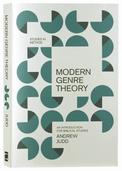 Modern Genre Theory: An Introduction for Biblical Studies
Andrew Judd
Zondervan Academic 2024
Reviewed By David Mitchell
Judges 19 is one of the most confronting stories in the Old Testament. How are we supposed to read it? Is it something of a cautionary tale about the likely outcome for those who commit adultery? Perhaps, like a modern horror film, its designed specifically to make us squirm and shrink away from it. Or, perhaps, it’s better understood as being a piece of wisdom literature with complex truths about life under the sun being conveyed through the narrative. Or, would we be better understanding it as simply another dot point in the decline of the Jewish nation during the period of the judges as they await a king? Or is it some mix of all of things?
How we read a given passage of scripture depends significantly on what genre we assign it. Hence the battle, say, between the literal six-day creationist and the theistic evolutionist, or between the reader who takes Jesus’ parable of the rich man and Lazarus (Luke 16:19–31) as speaking about the actual intermediate state and the person who thinks it does not. On all sides of such debates, people can agree on the authority of the Scriptures and yet be at odds as to what the scripture in question is authoritatively teaching.
Book Review: The Meaning of Singleness
- Details
- Written by: Denise Nicholls
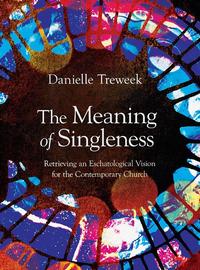 The Meaning of Singleness
Danielle Treweek
Ivp Academic 2023
Reviewed by Denise Nicholls
This is a great book! A must read for ministers of the gospel whether engaged, married, single or single again. I say this because so many ministers (myself included) have often longed for and prayed for young families to come to their churches as THIS will see a renewal of our Churches. Further we can either neglect or pay lip service to the Church as THE family of God, when we concentrate our efforts upon the nuclear family as the mainstay and structure of our Churches. Danielle Treweek’s 2024 Australian Book of the Year is a sober reminder of the place of the important and often neglected place of the single Christian disciple in the life of the Church.
Through thorough research on the various positions of single believers since the inception of the Christian Church, to the Patristics, the middle and late medieval church to the present day, Treweek provides us with a very readable book in ten chapters and four parts, navigating the Context, Diagnosis, Theological ‘retrieval’ and finally her own thoughts on the Meaning of Singleness for the evangelical church today.