
Book Reviews
Book Review: Mission is the Shape of Water
- Details
- Written by: Andrew Esnouf
 Mission is the Shape of Water
Michael Frost
100 Movements
Reviewed by Rev. Andrew Esnouf
Michael Frost has been a leading Australian voice on the theology and practice of mission in contemporary Western society for several decades and has authored numerous books on these topics. Despite this long list of publications, Mission is the Shape of Water displays a unique approach amongst his corpus of work. Frost’s recent books such as Surprise the World and Keep Christianity Weird have focussed on ways individual Christians can participate in God’s mission through everyday habits and individual flair. ‘Mission is the Shape of Water’ is distinct from these books in that it takes a wider approach, drawing upon Christian history to encourage and equip contemporary Christians in their missional endeavours.
Frost unpacks the title’s opaque imagery in the prologue. Firstly, water’s fluid nature means that it always takes the shape of whatever contains it. In a water bottle it takes the shape of a water bottle, in a bucket it takes the form of a bucket. Like water, Frost suggests, mission’s shape at a particular time and place is always determined by its context. Secondly, taking inspiration from the 2019-2020 pro-democracy protesters in Hong Kong use of the phrase “Be water!” to describe their agile and mobile protest tactics, which could at times combine into an unstoppable force. Coordinated protesters – just like water – are able to move swiftly in some contexts, to pool together into a large immovable contingent and then effortlessly disperse in some contexts, and to move forcefully together as a single force in other contexts. Mission is like water in that it is always contextually attuned to the immediate situation, and is best when a coordinated and responsive movement.
The core of the book are the ten chapters, each describing a different “shape” that water has taken throughout the history of the church, and offering some thoughts on how this shape may look in our current world. These shapes are: God slaying, peacemaking, flame bearing, spirit seeking, wordsmithing, freedom fighting, unshackling, contextualising, remissioning and unearthing. Each of these shapes arose in different contexts and functioned in different ways, and Frost presents them not as an essentialised list of permissible or essential ways to be missional, but as a smorgasbord of approaches, some of which are in tension with each other – sometimes uncomfortably. For instance, in “Spirit Seeking” shape, Frost commends the early modern Moravian missionaries for, among other things, “overlooking seemingly intractable social issues” such as polygamy and slavery in order to call people to salvation. This is in tension with the ‘Freedom Fighting’ shape of mission, in which Christians make resisting such intractable social issues as slavery and other brutalities the core of their missional endeavours. Frost is not contradictory in this, but rather is explicit that differing situations call for diverse approaches to mission.
There are further shortcomings of this book one should be aware of. Firstly, whilst this book includes many historical anecdotes, it should not be mistaken for a work of historical scholarship. Secondly, there is very little articulation of a theology or motivation for Christians or churches to be missional. Finally, there is only sparse advice for readers on how to discern the needs of their current context, and how to shape missional faithfully and effectively in their context. If the reader is seeking edification on any of these three topics, they are best to look elsewhere.
Ultimately, this book isn't perfect, and it isn’t a one-stop-shop for grounding the reader in all aspects of missional thinking and practice. And it does not claim to be. It is, however, an accessible and enjoyable jaunt through Christian history in the search for historical practices of mission that inspire and expand the imagination of the contemporary church.
Andrew Esnouf is Parish Minister (Youth) at St A's Merri-Bek in the Diocese of Melbourne
Book Review: Tidings of Comfort and Joy
- Details
- Written by: Dr Gillian Porter
 Tidings of Comfort and Joy
25 Devotions Leading to Christmas
Mark M. Yarbrough
Kirkdale Press
REVIEWED BY DR GILLIAN PORTER
In the lead up to Christmas it is easy to get sidetracked by Christmas events, buying presents, end of year activities and busy-ness. Yet the season of advent gives us an opportunity to pause and look for the hope brought in the son of God coming to be one of us. In his new Christmas devotions “tidings of comfort and joy” Mark Yarbrough brings the reader through the lead up to Christmas, providing space to reflect and be moved by the promise of Christ.
Each daily devotional draws from scripture and the author’s life to gently remind us of the powerful hope we have. He finishes each day with an Advent Application - a specific task or reflection to move the reader from a passive listener to active participant, and concludes with a prayer.
This short book of devotions is a profound and practical tool to engage mind, body and spirit in advent reflections as we prepare ourselves for Christmas to ensure we do not loose the meaning of the season.
Gillian Porter is a medical doctor in Melbourne and serves in public health mission.
Book Review: The Coming of the Holy Spirit
- Details
- Written by: Matt Jacobs
The Coming of the Holy Spirit
Phillip Jensen
Matthias Media, Australia, 2022
Reviewed by Matt Jacobs
Having become a Christian as a teenager in the mid-90’s, one of the biggest debates I had to navigate was over the person and work of the Holy Spirit. Some of my Christian friends spoke about the Spirit a lot — the amazing things that happened at their churches, and the experiences they claimed to have. Other Christian friends rarely spoke about the Spirit — their focus was all on Jesus and the Bible. What stood out to me was the tension, and sometimes outright hostility between those two groups. The big questions for me weren’t just, “who is right?”, but more personally, “what if I don’t feel anything particularly ‘spiritual’ in my life? What if I don’t have ‘spiritual’ experiences… am I missing out on something? Am I not really a Christian?”
How I wish I had a book like Phillip Jensen’s The Coming of the Holy Spirit to help me at the time. Though at first it felt a little disappointing: where’s the controversy? Where are the spicy take-downs of views he disagrees with? Wisely, right in the introduction, Jensen points out that ‘these issues may be so important to us, or may loom so large in our vision, that we can’t see around them to what God has actually said to us about the Holy Spirit. We may be so intent on solving our current problems and answering our burning questions that we fail to hear what God is saying to us though his word.’ (p7). And that’s the real highlight of this book.
Jensen begins by carefully walking through Jesus’ promise of the Spirit in John 14-16, then explores the arrival and world mission of the Spirit in the book of Acts, then moves on to the work of the Spirit in the Christian life by exploring the New Testament letters. With all of that important information as a foundation, the book then turns to address many of those hot-topics, in short appendices such as ‘baptism with the Spirit’, ‘speaking in tongues’, ‘guidance’, and ‘spiritual warfare.’ The result is a surprisingly gentle, yet incredibly clear and helpful book that carefully untangles much of the controversy, and settles on the wonderful truths that God has revealed in his word.
Two particular highlights for me were Jensen’s insights on the fruit of the Spirit (chapter 21), and the contrast between the ‘unspiritual’ and the ‘spiritual’ churches (chapters 23-24).
On the fruit of the Spirit, Jensen acknowledges the temptation we might feel to skip over the things that seem mundane, onto the more ‘controversial, exciting or glamorous aspects of the Spirit’s work.’ But to skip the fruit of the Spirit is to miss the vital, transformative, and truly miraculous work the Spirit produces in every Christian life (p254). The normal Christian life of submitting to the Lord Jesus and growing in Christlikeness is fundamentally and powerfully spiritual.
This is what I needed to hear more of in my youth! In contrasting ‘spiritual’ and ‘unspiritual’ churches (Ephesus and Corinth), Jensen points out that, ‘strangely to our ears, the most ‘charismatic’ church in the New Testament is in fact the most unspiritual. The church over whom most has been written on charismatic questions in modern times was in its own time viewed by the apostle not as a beacon of spirituality, but carnality’ (p283). That’s an insight I’d never noticed before! And again, ‘In their unspiritual minds, the Corinthians failed to understand that character is more important than competence, convictions are more important than curiosities, caring for others is more important than consoling oneself, and edification is more important than experimentalism’ (p305).
In summary, The Coming of the Holy Spirit is a clear, faithful, and gentle book that aims to listen to the wonderful truths that God has revealed about the person and work of the Spirit: that He himself dwells in our hearts forever, and grows us up in the image of Christ, by his Spirit.
The Reverend Matt Jacobs is the youth minister at St Jude’s Bowral, NSW.
Book Review: Timothy Keller: His Spiritual and Intellectual Formation
- Details
- Written by: Rhys Bezzant
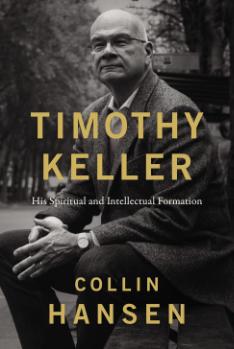 Timothy Keller: His Spiritual and Intellectual Formation
COLIN HANSEN
HarperCollins Religious US, 2023
REVIEWED BY RHYS BEZZANT
God in Gotham? It wasn’t too long ago that the ideas of thriving Christian ministry and downtown New York City were poles apart. No new church had been built in Manhattan for 40 years, that is until 2012 when Redeemer Presbyterian Church opened a new building. Of course, several of its campuses scattered around the city still rent premises. Indeed, one of their plants meets in the auditorium of the New York Society for Ethical Culture, a 19th century atheist society which is happy to rent out their lecture theatre οn Sundays. But today in some circles, New York has become synonymous with refreshed ways of engaging post-Christian culture. If it is possible there, it is possible anywhere. The leadership provided by Tim Keller at Redeemer in NYC has been game changing.
In his recently published biography, Collin Hansen has written a magnificent survey not essentially of Keller’s life but of the intellectual and spiritual influences which profoundly shaped him. It was truly absorbing. We learn about his education, mentors, and capacious reading. These took a bookish undergraduate, who grew up in a legalistic Christian home, and made of him a leading apologist, evangelist, and pastor in the later 20th and early 21st century. To be honest, I was sceptical of the project to publish a biography not a year after Keller’s death from pancreatic cancer in 2023. But it succeeds brilliantly because of its modest aspirations. A journalist, Hansen’s prose was crisp, the chapter and section divisions roughly following Keller’s career were helpfully focused, and his conclusions judicious. A full-scale biography awaits.
Keller became a Christian and cut his teeth in student ministry with the Inter-Varsity Fellowship at Bucknell University in Pennsylvania during the late and turbulent 1960s. He trained for the ministry at Gordon-Conwell in Massachusetts, not long after the amalgamation of the two schools (incidentally led by former Ridley principal Stuart Barton Babbage). Perhaps surprisingly, he then took up a Presbyterian pastorate in a working-class town, Hopewell, Virginia, whose claim to fame was advertised on its road sign: “Welcome to Hopewell, chemical capital of the South.” His professorial style was successfully matched to a social demographic hungry to know the Scriptures. He learnt how to communicate in new ways. He was subsequently called to teach preaching at Westminster Seminary in Philadelphia, after which he took up the reigns of a church plant in Manhattan in 1989, and stayed there for the remainder of his ministry life. His impact in Australia has been significant, for the church-planting organisation City to City was his brainchild.
Hansen does well not just to name the thinkers who have influenced Keller, but also summarises their theological commitments and outlines the story of their intellectual transmission. Keller’s legalism was transformed by reading Luther on the nature of grace, and he read the Puritans voraciously to discover how they understood the dynamics of the spiritual life. One of his most significant theological interlocutors has been Jonathan Edwards, 18th century pastor in Massachusetts whose project was to present the Christian faith using the category of beauty and thereby to address the human head, and heart, and hands together. In our fragmented world, this vision of harmony has proved particularly useful in Keller’s engagement with culture.
After his wife Kathy introduced him to the writings of the Inklings, Keller lived in the worlds of Narnia and of the Rings. These fuelled his commitment to the imagination as a strategy to renew society, and to refresh the church’s engagement with the cities of this world around it. Indeed, Kathy had a correspondence with CS Lewis from when she was a young girl! Many lecturers impacted Keller, for example Ed Clowney, Elisabeth Elliot, Richard Lovelace, and RC Sproul. His early Arminian sentiments were replaced with more self-consciously Reformed commitments during his theological education. In later life, he became friends with sociologist James Davison Hunter at the University of Virginia, with whom he investigated how any social movement might make an impact in the late modern world. The answer: networks. Keller was good at this.
His theological style was irenic and coalition building. No wonder he helped found the Gospel Coalition. His extraordinary church-planting and church health manual, Center Church, amply demonstrates his spiritual and ecclesiological vision. He wanted to join doctrinal clarity, personal piety, and cultural engagement, which together would shape the church’s witness and outreach. His theoretical and practical approach to diaconal ministries, in Hopewell or in Manhattan, was a significant element in his missional thinking. Of course, Keller’s prodigious output in publications is matched by his homiletical legacy. He did not set out to be a megachurch pastor, but perhaps that is at the heart of his success. He glories in the gospel of Jesus Christ, which “provides a nonoppressive absolute truth, one that provides a norm outside of ourselves as the way to escape relativism and selfish individualism, yet one that cannot be used to oppress others” (p250). We need the insights Keller gleaned from his reflection.
This was first published in The Melbourne Anglicans
The Reverend Canon Dr Rhys Bezzant is senior lecturer in Church History and dean of the Anglican Institute at Ridley College Melbourne and has recently been announced as the new Principal of Ridley College from 2025.
Book Review: The Anxious Generation
- Details
- Written by: Mark Short
 Jonathan Haidt: The Anxious Generation: How the Great Rewiring of Childhood Is Causing an Epidemic of Mental Illness
JONATHAN HAIDT
Penguin/Allen Lane 2024
REVIEWED BY MARK SHORT
American social psychologist Jonathan Haidt is best known for exploring the factors which contribute to the tensions and complexities of modern life. In The Righteous Mind he considered how moral disagreements arise not simply from contested facts but from diverse intuitions that go to the very nature of morality itself. In The Coddling of the American Mind (co-written with Greg Lukianoff) he lamented the rise of political polarisation and cancel in US universities.
His new book documents the alarming rise in mental illness amongst teenagers and young adults since 2010, especially females. Haidt contends that the blame lies with the deleterious impact of social media, with a secondary explanation being the continuation of overlyprotective parenting which has unnecessarily limited young people’s interaction with the physical world. “My central claim in this book is that these two trends – overprotection in the real world and underprotection in the virtual world – are the major reasons why children born after 1995 have become the anxious generation” p9 So why 2010? The internet and to some extent social media had been present before that date. However Haidt points to a number of innovations around that date which increased both the attractiveness of social media and its potential to be used as a means of social comparison. These included the introduction of the ‘like’ and ‘retweet’ buttons and the addition of a front-facing camera to smartphones, which is ideal for taking ‘selfies’. And why has the impact being worse on boys than girls?
Haidt points to girls’ higher vulnerability to social comparison and relational aggression, both of which are magnified by social media. For boys, the impacts tend to be different, and are seen in a tendency to withdraw from in-person engagement in favour of online gaming and pornography.
Since its release Haidt’s book has received much publicity and generally positive reviews. Where there has been pushback critics have argued that Haidt has confused correlation (increased use of social media coincided with deterioration in teen mental health) with causation (social media is responsible for the deterioration). Haidt is aware of this critique and responds by pointing to some experimental data and to the absence of any plausible explanation as to why mental health declined this much at this time.
There is of course a long history of blaming technological change for the problems of youth. It happened with Y and the internet; perhaps with the printing press as well. Nevertheless there is something about technology that simultaneously expresses our vocation as divine image bearers and our fallen-ness as sinful rebels. In his book The Life We’re Looking For Andy Crouch compares the promise of technology to the lure of alchemy – the aspiration for powers that would allow us to take the place of God. So the smartphone offers the promise of omnipresence and omniscience, but extracts a heavy price for this supposed privilege.
What is to be done about all this? Haidt makes a number of recommendations to legislators, parents and schools including raising the age of access to social media to 16 and developing schools that are both phone-free and conducive to unstructured unsupervised play. There is much wisdom here.
Of particular interest is a chapter called ‘Spiritual Elevation and Degradation’ where Haidt, who selfdescribes as a secular Jew, explores the potential of spiritual practices to elevate human well-being. These practices include shared embodied rituals, stillness and finding awe and nature. Haidt even references Pascal’s God-Shaped Hole, although he locates its origins in biological and cultural evolution rather than any divine design. “There is a hole, an emptiness in us all, that we strive to fill. If it doesn’t get filled with something noble and elevated, modern society will quickly pump it full of garbage. That has been true since the beginning of the age of mass media, but the garbage pump got 100 times more powerful in the 2010s.” p216
One must ask whether these spiritual practices and the promise they offer can ultimately be sustained in the absence of a commitment to divine design. Digital technology after all is thoroughly designed to enlist us as online consumers in the world of late modern capitalism.
Any resistance must begin with the conviction that we are created to know and be known rather than consume. As the Psalmist’s ancient wisdom reminds us “For you created my inmost being; you knit me together in my mother’s womb. I praise you because I am fearfully and wonderfully made; your works are wonderful, I know that full well.” (Psalm 139:13-14. NIV)
Bishop Mark Short is Bishop of Canberra and Goulburn.