
Church Leadership
Some Lessons from Revitalise Australia
- Details
- Written by: Rod Morris
 In February 2022 I took the step of concluding 13 years of parish leadership and moved into a new role as a Church Revitalisation Consultant with City to City Australia (CTCA). Under God, it seemed like a good way to bring together the various aspects of my ministry over the past 35 years and apply them in a way that would be a blessing to the wider church.
CTCA has been active in supporting church planters in Australia over a number of years. As part of this work they have developed training resources for planting healthy churches and gained expertise in ministry coaching to support church planters as they get established. In 2022, we have had the great privilege of working alongside over 40 church planters as they have established new churches. A number of these are Anglican churches, but we happily work with anyone who can affirm an orthodox confession of faith such as the Westminster confession, the Heidelberg catechism, or our own Thirty Nine Articles and the three historic creeds of our Prayer Book.
In 2021 CTCA took the step of moving into the realm of church revitalisation, and as I write this article in late 2022, we are working alongside over 60 churches across denominations and around the country. This work involves either a full church revitalisation project, or a specific intervention such as coaching, relational evangelism training, or a ministry vision workshop.
Our highest profile revitalisation project on the Anglican stage is with Bishop Richard and the Multiply Tas program, but we have also been working with the Diocese of Canberra Goulburn, parishes within Newcastle, Adelaide, Bendigo, the Northern Territory, and Perth, and churches within the Diocese of the Southern Cross. Personally, this year I have had the great privilege of working with twenty different churches across Victoria, Tasmania, NSW, ACT, Queensland, and the Northern Territory. My projects included three specific coaching relationships with other Anglican clergy, eight church vision workshops with Anglican, Presbyterian, Baptist, Brethren, and Independent churches, and thirteen ongoing revitalisation projects with a range of Anglican,
Presbyterian, Church of Christ, Wesleyan Methodists and independent churches. It is exciting to see what God’s people are doing in so many different contexts to see the gospel of Christ move forward.
Revitalise Australia
The full church revitalisation program with CTCA has three phases. The first is a health check and assessment of the current state of a church’s ministry. We visit the church’s Sunday services of public worship, and we assess the church’s facilities and their suitability for purpose. We meet with parish leaders to identify the current strengths and weaknesses of the church, as well as the opportunities and threats laying ahead. There is a 360 degree review of the minister’s leadership using the Christian Leadership Framework to assess their capacity for leading change, and there is a survey of church members to gain feedback on church health and life. We also gather existing data and reports such as annual meeting reports, NCLS results, vision statements, financial reports, parish publications, ABS census data, and whatever else the church has available that helps us understand their ministry and context.
The second phase is the writing of an extensive report in which we consider the church’s mission, vision, and values; their ministry systems for engagement, integration, and maturity; the infrastructure, governance, and operating systems; their church culture; and then we make some recommendations about how the church might move forward in their ministry. Phase three is then a year long journey in which we work alongside the minister and the church to help them implement the initiatives suggested.
Emerging themes
At this stage there are a number of themes clearly emerging across the churches that we are working with. The first is the stark reality of demographics. The churches are each significantly older than the communities they serve, often with a difference of well over 15 years, and there is a clear lack of young families, youth, and children across the churches. This clearly indicates that the churches should focus on developing their ministry to families as a priority. The clock is ticking, and time is running out!
An ageing congregation, often with limited incomes, means there is a real threat of churches becoming unviable, either financially or numerically. However, there is also a common concern that emphasis on recruiting new and younger members may result in existing and older parishioners feeling either overlooked or neglected.
There are too few doing too much, with few people having the energy or capacity to step up as volunteers, and as a consequence the churches are offering limited ministry options to their communities. There is a clear risk of the church spreading themselves too thin with a small pool of volunteers struggling with tiredness, ageing, busyness, and post-Covid residual exhaustion. It may be that Covid will prove to be a blessing in that it has enabled churches to stop lots of extraneous activities, and hopefully churches will be wise in what they restart.
Much of the load falls onto the minister, and church members are generally content with the clergy and staff they have serving. Whilst the ministers each have their own strengths and weaknesses, together with their corresponding professional development needs, they are generally suitable for the ministries they lead.
There is an identifiable sense of dissatisfaction with the support offered within most dioceses as it does not seem to clearly facilitate and enable ministry to flourish. People are feeling swamped by the legal and administrative requirements for ministry, and whilst these are recognised as necessary, they seem secondary to core ministry tasks.
Whilst the Sunday services conducted in various churches differ according to their liturgical and theological traditions, they are generally appropriate to their context and the existing congregation so there does not seem to be a great need to change existing services. But at the same time, there is the glaring problem that these services fail to engage with younger members of the community.
There is a pressing need to initiate new services that are more accessible for families and non-churched people. Consequently, almost every church needs to focus on initiating these new services. Whilst some churches have specific legacy issues related to historical abuse which clearly undermine their reputation within their community, people are generally cautious about doing church things following the Royal Commission and there needs to be deliberate attention in restoring the church’s reputation as a safe place.
A common theme is a lack of vision and the absence of a clear sense of where the church might be in five years and the steps needed to get there. I have already decided that this lack of vision and the consequent sense of being stuck in maintenance mode is actually definitional to church stagnation. Consequently, developing an easily shared vision and defining ministry pathways seems to be a priority with each parish. Churches are in maintenance mode rather than missional mode and none of the churches have an easily communicated vision of where they believe God is taking them over the next five to ten years. CTCA are addressing this issue using a vision workshop which helps the church identify where they think God is taking them and the steps needed to make that vision a reality. It is an effective tool and I think the power of the workshop is that it gets the key leaders within the church to develop an agreed sense of what they should be doing, and where they are going.
Similarly, churches do not have well-developed systems for engagement with the community, integration into the life of the church, or for producing spiritual maturity. They are generally just doing what they always have done, and there is little sense of intentionality within the church’s practice. Sadly, amongst the churches needing revitalisation there is real enthusiasm and openness to exploring new ways of using facilities to generate income, but not an equal enthusiasm for exploring new ways to use facilities to initiate ministry. Churches are running midweek ministry programs for families and engaged with community support programs such as op shops, food banks, and emergency relief, but there are few functioning pathways between these ministries and the worshipping community. Consequently, they each need to explore and define the way in which they engage with their community in outreach, integrate contacts and new members into the worshipping life of the church, and to a lesser degree, how they help people grow to spiritual maturity.
There is a general expectation that outsiders need to take the initiative in connecting with the church and there seems to be a degree of spiritual passivity, introversion, introspection, and a cultural cringe about evangelism across the churches. Most communities would not notice if their local parish closed down. There is a clear opportunity to grow the church’s profile within the community by owning our identity and developing clearer strategies for community engagement. CTCA is addressing this specific need with the ‘Ripple Effect’. Julie-Anne Laird, who is a Lay Canon for Church Planting in the Diocese of Melbourne, has developed this material together with Sam Chan and we are seeing churches enthusiastically embracing this combination of whole church training workshop, small group resources, and assistance with developing an understanding of the local community.
Ten steps to help revitalise your church
- Check the pumping heart of gospel clarity within your church. It doesn’t matter how slick your ministry is if you’re not proclaiming Christ and helping people grow to Christian maturity.
- Rally the troops to pray. It is God’s church, and He is the one who brings about church revitalisation.
- Develop clarity of your vision and identify the steps for moving forward over the next 5 years.
- Audit the existing core ministry systems of your church and check their effectiveness in engaging the community, integrating people into the life of the church, and growing to maturity as disciple making disciples of Jesus. Especially check your Sunday services and their effectiveness as the shop front for your ministry.
- Conduct a local community study in order to develop a community profile and understand your ministry context and how you might engage meaningfully with those you serve.
- Create a disciple-making culture and work on equipping people to effectively share the gospel.
- Mobilise your members for ministry by helping them identify their gifting and find areas for ministry service.
- Develop a leadership pipeline that helps people be disciple-making disciples.
- Identify and deal with any specific problems, the skeletons in the cupboards and elephants in the room, which may be having a detrimental impact on your church.
- Ensure there is ongoing support and encouragement for the Senior Minister.
Rod Morris is a Lead Consultant within the Revitalise Australia program with City to City Australia.
The Great Collapse
- Details
- Written by: Stephen Hale
 One of the challenges we are all living with is the reality that many churches will close in the next decade. It gives me no pleasure to say this, but it is a reality that is upon us. Every diocese in Australia has a cohort of churches with very small numbers and mainly elderly parishioners.
Sooner or later these churches reach a point of unviability. In saying this I’m not stating anything new. We’re all familiar with these situations. The ramp up of multiple compliance requirements in the past decade and the two years of pandemic have accelerated the situation.
The thing that is new will be the scale of the problem. Many of these churches have been clinging on for many years and it’s remarkable that they have gone on for as long as they have. Most of these churches are within the Anglo Catholic/Traditional side of the Anglican Church but it isn’t confined to this tradition. As a clear sign of the challenge of our reality it was reported at the most recent Melbourne Synod that over 50% of parishes have no children in attendance!
In God’s providence the counter to this is that many new churches have started in the past decade and there will be many more new churches in the years ahead. More especially we are being greatly blessed by the birth of many language-specific (non-English speaking) faith communities which often see significant growth. At the most recent ordination in Melbourne the number of ordinands was 10 to 5 in this direction!
I believe that it is easier to start a new church than to renew an existing church. Existing churches have many challenges and ministers who are appointed to them are often seeking to achieve twin outcomes. They are seeking to sustain a traditional service with a group with high pastoral needs, while simultaneously birthing something new. It can be done, but it’s a tough gig. While there are lots of great examples where this has led to the birth of something new, there are also many ministers who have been burned along the way in places where it has been too hard, and it hasn’t happened.
So, what should we do? Is this a disaster or is it an amazing opportunity? The comments in this article are more applicable to our metropolitan and provincial cities.
The challenges in remote rural areas are great and I don’t claim to be an expert in that area. I give thanks for and pray for BCA and the remote rural bishops regularly.
The worst-case scenario is that we do nothing intentional and allow church after church to die with nothing to replace them. This would be tragic. There needs to be an intentional diocesan strategy. Without a strategy, more often than not the Assistant Bishops in the larger dioceses are put into an impossible position. They are left to deal with church after church facing similar scenarios and burning huge numbers of hours with no clear framework for addressing it. Bishops are often obligated to find clergy for too many unviable churches and it is proving to be increasingly challenging to find them. A growing number of parishes have had a rolling series of locums for years.
In broad terms I would suggest we are asking too many clergy to go to too many Parishes that are too far gone, and the consequences aren’t great for anyone! While church renewals can and do happen, it is unrealistic to expect them to happen in multiple places simultaneously.
Another scenario is the cobbling together of churches that are within some proximity to create a basis for a fulltime minister. This model can work, but only if there is clear intentionality about how it might work. Without that this is often a recipe for significant tension and conflict.
It’s not much fun leading two or three centres all of which are in a similar scenario and all of whom want the minister between 9am and 11am on a Sunday morning.
Another worst-case scenario in all of this is that progressively over time properties are sold and dioceses build up their central reserves to buffer against abuse payouts. The diocese is an organising entity not the church and the role of the diocese is to support the church to grow, not to protect itself.
The closure of churches does free up assets that can be used to:
- create a church planting fund to assist in the planting of new churches.
- more fully support the birth of many more culturally-diverse (non-English speaking) congregations.
- intentionally partner with the medium size and larger churches to invite them to take over dying churches with a view to planting new congregations. The church planter is then a part of a team as well as having the back-up of a stronger church.
- facilitate the closure of a few churches within proximity with a view to the sale of one or more of the sites and the building of a new centre with contemporary facilities. I spoke at a Uniting Church last year where 5 churches had agreed to close and amalgamate and come together on an existing site with all sorts of allied activities happening with several Sunday congregations.
- buy land for new outer suburban and inner urban plants.
To navigate these and many other changes bishops need to be honest about the reality of where we are at. Alongside of that they need to offer a fresh vision of what is possible and actively support those who are seeking to make that a reality.
Bishop Stephen Hale is Chair, EFAC Australia and EFAC Global.
How Will We Make It?
- Details
- Written by: Rev Samuel Crane
 How do we think we will make it? To be clear, I am not talking about salvation. I am talking about our expectations for life in ministry. After we graduate from college, get ordained or commissioned, brighteyed and full of hope at how God will work to build his church, what do we really think will happen?
We have a few options of course. We can look around and see ministers who have fallen into devastating sin, abusing money, power, and sex. Clearly not a highlight for the yearbook. If not that, we could burn out and retire within a few years, or maybe, just maybe, we hang in there and hope that Jesus comes back soon. Like next week?!
I recently saw a photo of thirty or so people whom I studied at theological college with. Some of them graduated with me or around the same time, all within the last 10 years. Of that group, one had to leave ministry because they were disqualified for moral failure, one left because the burden was too great and they burnt out, and four others were continuing on but badly bruised by the impact of other clerics. I count myself as one of the bruised. And of the thirty, I have lost touch with at least half so their stores are unknown to me.
What are we to do? How are we to survive ministry? Honestly, I don't even just want to survive, just hanging in there one more day. I want to thrive, and not because I want glory, but because I want my family to not see me as someone broken by what is the hope of the nations, and I don't want to see myself as another carcass behind someone else's bus.
So as I limp and seek Christ's healing, here are some things that I am learning. I don't have all the answers but I hope this is helpful to you.
ONE. Cling to Christ's call to follow him into salvation and TWO. Cling to Christ’s call to follow him into his mission. It is purely a gift of grace that I still call Jesus my king and saviour. We grieve as pastors when people share their stories of how the church has hurt them and how they have walked away. It is only God’s grace that my story is different. And not only has God kept me in the vine but he still calls me to lead his church, a wounded pastor. So with great thanks, I cling to this dual call. We don’t want to be one of those stories of pastors who walk away from Jesus, so with me, strive to nurture our faith, seek healing, grow in prayer and biblical devotion, and keep trusting in God to lead us in our ministry. If God can save Paul from a stoning and a shipwreck, what can a bully do?!
THREE. Gather people around you who are there to bless you. We know we can't do it alone but I think practically we can often live as if that is the case. Ministry is isolating in how it changes how we live and serve others in God's family, so we need to be proactive to gather people around us who are there for us, mentors, counsellors, peers, mental health professionals, etc. Right now I think the more the merrier!! So call your GP or EAP, get a mental health care plan and get support. Call a pastor who is a little bit older than you, a bit further along in their journey, and ask them to mentor you, to care for your soul.
One of God's great gifts to me is a peer group filled with other Gospel ministers. Some of us are in church ministry, some in campus ministry, and some in theological education. Our singular purpose is to be there with each other as we take the hits of ministry and to encourage each other to keep clinging to Christ and his call on our lives to lead his church and to proclaim the gospel.
If you don't have a peer group and a mentor, I can't impress on you how invaluable they are. It is priceless to know there are others who are with you, others who are praying for you, and that there are others you can go to and offload your situation without judgment or offence. I have ministered in a multi-staffed team and now on my own, and in each church, I have needed people outside of my ministry context to whom I can cry out, safe people who love me and are with me. And at times, this love has been hard truthful words that I didn’t want to hear. We need people who we can share our deepest struggles with so that the pulpit is not our moment of self-care but a moment of sharing how Jesus has triumphed (definitely needs to be past tense) over our scars.
Practically what this looks like in my peer group is that we go away on retreat each year to debrief our year of ministry, to pray deeply for each other, and to reflect on our ministry by discussing a helpful resource. We also share prayer points throughout the year for our ministry but mostly for each other in ministry, our own faithfulness, holiness, struggles, and of course joys, ministry isn’t all bad! At times we also call each other for counsel as we are confronted with challenges and help each other reflect in practice.
There is a joy that comes from fostering deep fellowship with others, a joy that is a comfort during the isolation and struggles of being a jar clay. So let’s carry this treasure together, for the glory of our Lord Jesus and for our joy and peace and thriving.
Samuel Crane is Priest-in-charge of St James Glen Iris, Victoria.
Don’t Get Sick, Get Supervision
- Details
- Written by: Rev Fiona Preston
 My first career was in Fashion Design. I studied for four years and found a job through a friend designing children’s clothes for a company that supplied to Myer, Target and Big W. It was a steep learning curve! It started out with much excitement and enthusiasm as I used the skills I had learnt at TAFE and learnt new skills on the job about shipping, designing a year in advance, and looking at previous sales to dictate future styles. But nothing from my studies could prepare me for the emotional toll the job would have on me and the difficult personalities I would meet along the way. One manager I had was prone to throwing things and didn’t believe me when I came down with influenza: the real one that makes your body shake uncontrollably and binds you to your bed for a good week. There was very little trust in that workplace, a lot of gossip and much finger pointing when things went wrong. After four years I couldn’t take it anymore and after one particularly bad week I told my husband I was quitting…tomorrow! After leaving I had plans to create my own pieces of fashion so I went out and bought unique fabrics from fancy shops, and bought an industrial sewing machine. Sadly, I was exhausted and uninspired. All the joy and enthusiasm I began my career with was gone. I sold the sewing machine and I still have the bag of gorgeous fabric sitting in storage. I didn’t have the words for it at the time, but I was burnt out. I never returned to the fashion industry and the thought of sewing garments still fills me with anxiety.
In their book ‘Burnout: From Tedium to Personal Growth’ Ayala M. Pines and Elliot Aronson describe burnout as, ‘The result of constant or repeated emotional pressure associated with an intense involvement with people over long periods of time…Burnout is the painful realisation that they can no longer help people in need, that they have nothing in them left to give.’
Sadly, my story isn’t unique, burnout is very real and the price of burnout to self, family and community is high. As a now ordained Deacon working as a prison chaplain and Spiritual Director, God has been good and has certainly taken me on an interesting journey through life. In a way, I’m fortunate that I burnt out from the fashion industry and not from ministry – though it could easily happen. It’s very upsetting when someone burns out from working in Christian ministry. Where they were once full of joy and enthusiasm, they become fatigued, gloomy, fearful and resentful. Unfortunately, I know people who have burnt out and I am aware of others who are on the precipice of it.
One issue I perceive is that we start out our ministry vocation with great passion! Comparing our ministry to Jesus, Paul or other greats who have walked before us, who appear to be so self-sacrificing and sold-out that when we feel tired or weak, we berate ourselves for not being more capable. After all if they can do it shouldn’t we? Actually, we are all unique and our ministry settings and situations are unique too. As members of the body of Christ comparing our ministry output won’t benefit us and may bring more anxiety than anything else.
Another issue I observe is the toll of being a solo minister. As the number of ordained clergy decline and church membership lowers there is less opportunity to employ curates, deacons or assistants. If ministers don’t set good boundaries from early on and delegate to lay parish members, they can end up doing everything and being the sole solution to most problems in the parish.
These are just two areas I identify that can cause stress and pressure. So, what can help with all this? I believe one key answer is sharing our mental load with others.
Prioritising our mental health and wellbeing means we are putting in measures so we can last the long run in ministry. One way I encourage is to have a recurring monthly appointment in our calendar for supervision, counselling, or spiritual direction. Many dioceses are now providing pathways to subsidise supervision which will enable more people to afford this essential care and oversight. Unlike when we go to the doctor when we are sick, or to the physio when our body aches, supervision is something we can put into practice before we get too sick and achy and, is a means of prevention before we need intervention.
What does supervision look like? Professional Supervisor Emily Rotta, a registered supervisor and member of the ACA College of Supervisors says “In sessions, I create a supervision relationship based on trust and transparency. As well as providing an open space for learning and best practice which focusses on the supervisees self-reflective practices and wellbeing.”
Supervision should be a safe, confidential space where the wins and hardships of ministry can be aired and explored and where one should come away feeling heard and supported.
Let us strive to run the long race in ministry, be encouraged to find a supervisor and make an appointment today.
Fiona Preston ministers with MinisTree Bendigo and is a Spiritual Director.
Stress, Burnout, and … Creativity?
- Details
- Written by: Rev Ralph Mayhew
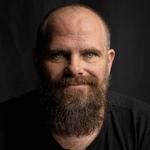 “What’s cracking? It’s Ralph Mayhew here and I’m a full-time minister, serving a merger church, in Burleigh, QLD and I have a YouTube channel on photography and filmmaking, which has nothing to do with my ecclesiological ministry!”
If you watch one of my videos, you won’t get that intro, but you’ll get something that feels just like it. I remember the day when I clicked the button that would send my first YouTube video live. It was a couple of years ago, and the torrent of 36 views that followed was inconsequential. It was a gamble to start my channel, as I wrestled with the question “Will this bring me more life or take it away?” This was the only question I needed to answer. I had a hunch it would, but the only way I’d know, is if I tried. I did try and it has, tenfold.
This question “Will this bring me more life or take it away?” is a dangerously underrated question we often feel guilty asking in the world of Christian leadership.
I sit with lots of new leaders, many of them young who are feeling tired, worn out, stressed, perhaps even angry, exhausted, frustrated and with declining mental health reserves. The common thread in every one of these scenarios is they are putting out more than is being poured in. Their life is being taken away, and not being replenished. They are gaining the whole world of ministry (only not really) and losing the health of their soul in the process.
“But I meet with God every day, I read his Scriptures,
I seek his will for my life and my ministry. How can I still be feeling like this?”
A valid retort, but unfortunately an incomplete one. As these words are expressed, Psalm 23 whispers to me “I will make you lie down in green pastures.” I often wonder if God is saying to this generation of Christian leaders, ‘you need to find a place where you are reconnected with where you came from. Where you find joy, meaning from being, express your creativity and aren’t held hostage by unrealistic measures.’
Of course, time alone in prayer, and Scripture study is imperative to our health as leaders, but the story is much broader and deeper than just this. Our story began with a creative God, who breathed us into existence. We could have looked like anything God desired, the result being we were inspired by his own image. In exercising his creative Spirit he produced us in the form we have.
The writer of Genesis declared: “So God created humankind in his own image, in the image of God he created them; male and female he created them.” (Gen 1:27)
We were created, we are created beings, by a creative God, who declares his creation to be made reflective of His image, a creative one! Do you see the common thread? We were made by the creative spirit of a creator God, to live a creative image, by creating. So why is this the first thing to be eroded in a leader’s
life as they step into the river of Christian ministry? Perhaps because the creativity the church requires from us (especially now); perhaps the time and energy we might otherwise invest in personal replenishing creativity, has been all but used up by the demands of ministry.
When I push back on those leaders and ask ‘what are you doing that is creative? That isn’t attached to any goal posts or key performance indicators, that brings you joy and causes your energy to be spent in a most wonderful way?” They nearly always look at me with loss for words, a lingering grief with a hint of intrigue. The intrigue comes from the invitation into creativity, which resonates with something deep inside them.
As the conversation ensues there’s always something that causes them to say “You know, I used to do that,” or “I’ve always wanted to learn about that or give that a go.” Those who follow through find greater balance, increased joy and a creative expression that repairs and sustains their soul like nothing else can. It’s as if they now get to enjoy the most painless and freeing therapy session, whenever they wish.
That’s why I’m on YouTube. That’s why I’m a photographer. It gives me life! It improves my relationships, my ministry, my energy reserves and my mental health.
Making a video, of which I have done a few times now, is a wonderfully creative experience. It starts with an idea, then develops into a plan, with a loose script, I then film and re-film, and sometimes, re-film again. Then we go to the editing room a process which has gotten longer and longer, correlating with the length of time I’ve been on the platform, and finally I export, upload and release it to the world.
My channel is about photography and filmmaking, which is the other creative pursuit I document with my videos. I call it therapy. Getting outside with my camera in creation. Accepting a challenge to capture something intricate, beautiful or bizarre. It enables who I am to be celebrated and expressed, in a way that doesn’t need to please those who have varied expectations of me (think: those you minister to).
I love those stages, all of them, because each, in their own way are creatively replenishing. Replenishing because I am exercising my creative muscle, outside of the need to please anyone or anything. It gives me life, it stretches my ability to think beyond constraints, it offers something that may help others, and it ushers me into wonderful connections and relationships with people who I wouldn’t have otherwise met.
I can spend my full day off, planning, photographing, filming, thinking and creating, and as a result I then move into the following week with far more energy and vitality than I had previously. I’ve discovered that when we take our cues from culture about what it means to replenish, binge watching Netflix on the couch, that the image of God within us is dulled.
But when we adopt the same stance that our creator God took, who is madly in love with us, we discover life, replenishment, strength, courage, hope, joy and creativity, all of which God then uses in our ministry.
I have also discovered that there is only one person who can truly give you permission to explore this for yourself. It’s you! And me now, too, I guess. No one else will be able to gauge or trust the incredible value a unique creative pursuit can have for you, but you can try it for yourself and see. My prayer is that you do!
Ralph Mayhew is the pastor at Burleigh Village Uniting Church and you can find him online at Ralph Mayhew Photography (http://ralphmayhew.photography/)